
Binance Coin (BNB) casinos compared against the UK register in 2026
 Available in GB
Data current as of 23 September 2026, checked against the Gambling Commission’s public register of gambling businesses.
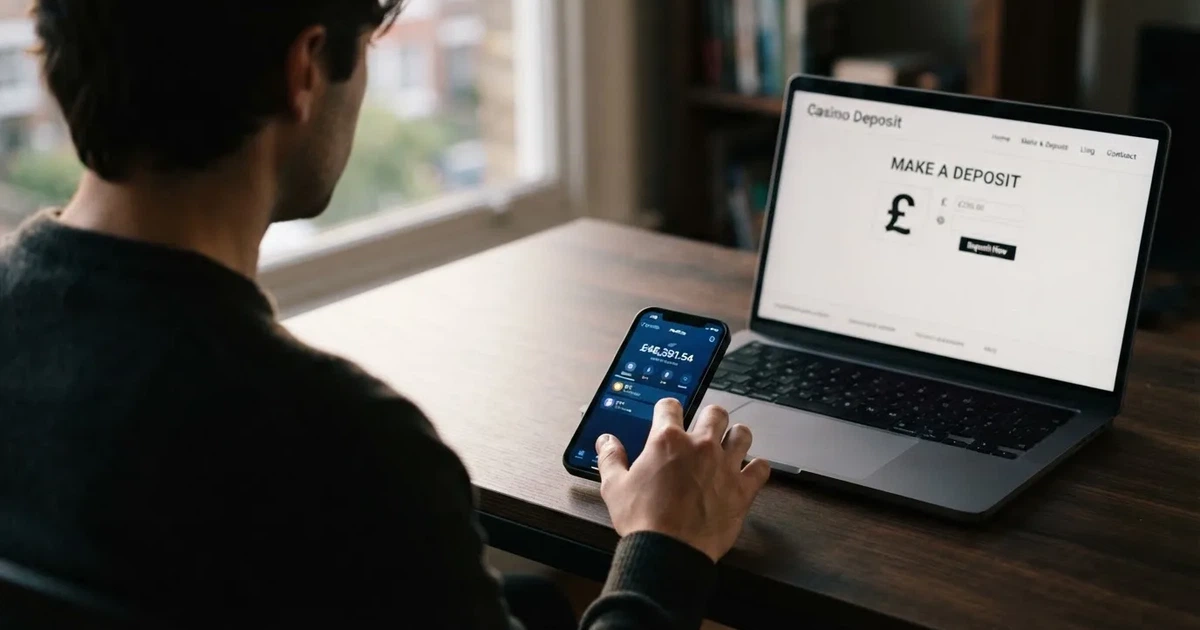
Comparing Binance Coin casinos for British players brings one fact to the surface: not one of the licence holders named on the Gambling Commission’s public register advertises Binance Coin as a deposit method, and the regulator’s own line on crypto-funded play treats it as a high-risk indicator that licensed operators must escalate through enhanced customer due diligence. The comparison the searcher actually wants, then, is not a ranking of ten BNB-friendly brands. It is a map of where BNB sits in the British market, what a player gives up by leaving the licensed tier, and which of the familiar high-street names appear on the register that this comparison implies the reader already trusts. That is what this page sets out.
The register matters because it is the whole test of whether a brand operating in Great Britain holds a Gambling Commission licence. Section 33 of the Gambling Act 2005 makes it an offence to provide gambling to people in Great Britain without one; a Curaçao, Maltese or Gibraltar licence does not substitute. The register itself, freely searchable on gamblingcommission.gov.uk and downloadable as CSV or Excel, listed 139 businesses holding an active remote casino operating licence on 18 September 2026, with 1,065 active and 361 white-label casino domain entries attached to those accounts. A white-label site trades under another company’s licence — the brand on the front of the site is not the company behind the cashier. The two carry the same licence number, but the operator of record is the holder named in the register, not the name on the homepage.
The featured operators below are taken from that register, in the order §6 of the research record lists them. Every one of them carries a remote casino licence in the conventional format, a six-digit account number followed by -R- and a six-digit licence number followed by a three-digit suffix. None of them is recorded as accepting Binance Coin. That is the structural finding the page rests on, and the rest of the article unpacks what it means for the reader.
Table of Contents
- Binance Coin (BNB) at a glance: what it is and why a casino might list it
- What the Gambling Commission register actually shows in 2026
- Legality, licence and the 10x wagering cap
- What a BNB casino outside UK licensing actually costs a player
- How a BNB deposit differs from a standard bank transfer at a UK casino
- The 10x wagering cap and what it means for a bonus
- The wider Binance Coin landscape: where BNB sits among crypto deposits
- The featured operators on the register
- Comparison across the ten
- Where a player who wants BNB actually ends up
- Practical takeaways for the player comparing options
- What the page is not for
- Frequently asked questions
Binance Coin (BNB) at a glance: what it is and why a casino might list it
Binance Coin was issued in July 2017 by the Binance exchange, founded that same year by Changpeng Zhao and Yi He, with the initial coin offering raising around $15 million. The token started life on the Ethereum network and migrated to Binance Smart Chain when the chain launched in September 2020; in 2022 the chain itself was rebranded BNB Smart Chain. It runs on a proof-of-stake consensus mechanism, and its maximum supply is capped at 200 million tokens. By 2021 Binance Coin had the third-highest market capitalisation among cryptocurrencies.
That history explains why BNB shows up on crypto casino cashier pages. A token with a deep liquidity pool, a popular exchange behind it and a chain optimised for cheap transactions is an obvious choice for a payment-methods page. The exchange behind it carries weight in the wider crypto market, which is what a casino marketing BNB support leans on. It does not explain why the same payment method sits outside the British regulated market — that is a question of how UK payment and gambling law treat cryptoassets, taken up in the section on legality.
For comparison: Bitcoin, the reference point most readers will already know, mined its genesis block on 3 January 2009 after Satoshi Nakamoto published the white paper on 31 October 2008. Bitcoin’s proof-of-work consensus, ten-minute block time, 21 million coin supply cap and 210,000-block halving cycle are the technical vocabulary the rest of the crypto market borrows from. Binance Coin is a younger, faster, application-specific token running on a different chain with a different consensus model. The two are often lumped together as “crypto deposits”, which is the language crypto casinos use; the law treats them as one category of cryptoasset and applies the same Money Laundering Regulations to firms dealing in either.
What the Gambling Commission register actually shows in 2026
The register is the definitive public record of which brands are licensed to take British customers online. The domain list within it pairs each website with the licence account that runs it and a status flag — Active, Inactive or White Label. On 18 September 2026 it carried 139 active remote casino operating licences against 1,065 active and 361 white-label domain entries, which works out to roughly 4.8 active and 1.7 white-label domains per licence holder on average. The white-label count is the one that catches readers out, because a player landing on a brand they have heard of may be on a site operated by a company they have never heard of under the same licence number.

A licence number on the register takes the form account-R-number-suffix. The leading six digits are the licence holder’s account number, the R marks a remote (online) licence, and the suffix is the per-licence serial. So 057924-R-334666-005 belongs to account 57924, Rank Interactive (Gibraltar) Limited, and that licence runs Grosvenor Casinos as an active domain. The shape is uniform across the register, and reading the number itself tells the reader which entity sits behind the brand — which, in the British market, is the company the player would have to deal with in any dispute, not the marketing name on the homepage.
Three of the ten featured operators sit on the same licence. Betfair and Paddy Power are both listed as active domains of account 39411, PPB Games Limited, on licence 039411-R-319335-010. They are not separate businesses for regulatory purposes; they are two brands run by the same licensee. Several other licensees run multiple brands the same way — Ladbrokes, Coral and Gala Bingo sit under LC International Limited — and that shared licence is the rule in this market, not the exception.
Legality, licence and the 10x wagering cap
British gambling law is built on the Gambling Act 2005, which covers Great Britain — England, Scotland and Wales — and not Northern Ireland. The Gambling (Licensing and Advertising) Act 2014 extended the regime so that any operator taking customers in Great Britain needs a Commission licence wherever it is based. The Commission itself is sponsored by DCMS. Section 33 of the 2005 Act makes providing gambling to people in Great Britain without a licence an offence; the Commission’s enforcement powers against illegal sites include cease-and-desist notices, search-engine delisting referrals and payment and hosting referrals, but it does not have ISP-blocking power. No penalty is aimed at the player. What a player loses on an unlicensed site is the protective framework — there is no GAMSTOP coverage, no route to Commission complaints, and no approved alternative dispute resolution.
For a casino to take a BNB deposit, it would need to satisfy two regulators at once. The Gambling Commission treats cryptoassets as a high-risk payment method and expects licensed operators to apply enhanced customer due diligence when a player funds play with them. A Commission-licensed operator also has to notify the Commission of any change in payment methods, including the introduction of crypto-asset acceptance, and to review its anti-money-laundering risk assessment before doing so. None of this is a flat ban, but it raises the cost of compliance enough that no licence holder on the register has gone down that road in the data snapshot the research covers.
Wagering rules have tightened in the same window. Since 19 December 2025 wagering requirements are capped at 10x, and mixed-product bonuses — the kind that hand out casino spins after a sports bet — are banned.
Summary of Bonus Rules
| Rule | Details |
|---|---|
| Wagering cap | 10x maximum since 19 December 2025 |
| Max stake (25+) | £5 since 9 April 2025 |
| Max stake (18-24) | £2 since 21 May 2025 |
| Auto-play | Banned since 31 October 2021 |
| Financial limits | Required before first deposit |
Players face their own limits. Maximum stake per game cycle is £5 for players aged 25 and over, in force from 9 April 2025, and £2 for 18 to 24-year-olds, in force from 21 May 2025. There is no state-set deposit or loss ceiling; instead, operators must prompt a customer to set a financial limit before the first deposit, a rule in force from 31 October 2025. Auto-play has been banned since 31 October 2021, a single slot spin may not resolve in under 2.5 seconds, and losses disguised as wins are not permitted. The minimum age is 18; name, address and date of birth are verified before the first deposit or any play, a requirement in force since 7 May 2019. Anonymous play is not possible at a licensed site.
Credit cards have been banned for gambling since 14 April 2020, including credit cards routed through e-wallets. That is the rule that knocks out one of the more common workarounds British players used to use, and it leaves debit cards, bank transfers and a handful of approved e-wallets as the working deposit methods at licensed brands.
On the tax side, players pay no tax on gambling winnings in the UK. Operators pay Remote Gaming Duty, raised from 21% to 40% from 1 April 2026, which is the operator-side figure, not a player-side one. The 40% rate is the headline number a reader will see in trade press in this financial year; it does not change what a winning player takes home.
What a BNB casino outside UK licensing actually costs a player
A BNB casino that does not hold a Gambling Commission licence is, by definition, an offshore operator. The page does not name any such brand as a recommended place to play — that would be advertising — but it owes the reader a clear account of what leaving the licensed tier means.
The first loss is GAMSTOP. GAMSTOP is the national online self-exclusion scheme, and it is a mandatory condition of every Commission online licence in force since 31 March 2020. A player can self-exclude for six months, one year or five years, and cannot cancel the exclusion early. A GAMSTOP-registered player who moves to an offshore BNB casino bypasses their own exclusion; an offshore BNB casino has no obligation to honour a GAMSTOP registration it has no way to check. The protection the player set up for themselves does not travel with them.
The second loss is the complaints and dispute route. A licensed British player with a complaint goes to the operator first, then to an approved alternative dispute resolution provider. If the ADR route fails, the Commission is the backstop. None of that infrastructure exists for a player at an unlicensed site. Recovering misallocated funds from an offshore operator is a private legal matter in whatever jurisdiction the operator sits in, with whatever consumer protection that jurisdiction offers — which in the common offshore licensing centres tends to be thin.
The third loss is the anti-money-laundering and safer-gambling friction a licensed operator is required to apply. The same friction that makes a BNB deposit inconvenient at a Commission-licensed site — the enhanced due diligence, the source-of-funds checks, the transaction monitoring — exists to protect the player and the market. An unlicensed site skips it. Faster signup, smaller deposits, fewer reality checks and lighter affordability scrutiny are the selling points an offshore crypto casino advertises. They are also the things the British regime was built to require.
There is also a regulatory point players should know. UK firms carrying out cryptoasset activities, including firms dealing in tokens such as Binance Coin, must register with the Financial Conduct Authority under the Money Laundering Regulations. The FCA became the anti-money-laundering supervisor of UK cryptoasset businesses on 10 January 2020 under Regulation 8L and Regulation 9 of the MLRs. Since then the FCA has received 417 cryptoasset registration applications, of which 68 — 17% of determined applications — have been registered and 263 (67%) withdrawn. The FCA’s new authorisation regime under the Financial Services and Markets Act opens for applications on 30 September 2026. None of this directly governs a player using Binance Coin at a casino, but it shapes which exchanges and wallet providers can lawfully serve a British customer, and it is the framework a player runs into when moving BNB in and out of a casino wallet.
On the tax side, HMRC does not treat cryptoassets such as Binance Coin as currency. It treats them as property, so individuals owe Capital Gains Tax when they sell them and Income Tax when they receive them, for example from mining or staking. The same treatment applies to Bitcoin and to other cryptoassets individuals hold. A player who buys BNB, deposits it at an unlicensed casino, plays, and cashes out in BNB is running through a chain of disposals, each of which is a CGT event in HMRC’s view. Keeping records is on the player; the casino does not report to HMRC on the player’s behalf.
How a BNB deposit differs from a standard bank transfer at a UK casino
The mechanics are different enough that the comparison is worth spelling out. A bank transfer at a UK casino is a closed-loop payment in sterling, between a named UK bank account in the player’s name and a UK-licensed operator subject to the Gambling Commission’s anti-money-laundering and affordability rules. The operator sees the player’s name, the player’s bank, the deposit amount, and runs the deposit against its source-of-funds and affordability framework. A £500 deposit triggers the right checks at the right thresholds, and the player has the full Commission complaints and ADR framework behind the transaction.
A BNB deposit is an open-loop payment on a public blockchain. The player sends BNB from a wallet address they control to a deposit address the casino provides. The casino sees the wallet address, the amount in BNB and the time of the transaction; the casino does not automatically see the player’s name. The transaction settles in minutes, the conversion to sterling (or to the casino’s house currency) happens at whatever rate the cashier applies at the moment of credit, and the on-chain record is permanent. None of that is, on its own, evidence of identity; identity, where it is required, comes from a separate KYC step the casino runs on top of the payment.
For a player at a Commission-licensed operator, the difference shrinks. The licensed operator still has to verify name, address and date of birth before the first deposit, has to apply enhanced due diligence to crypto-funded play, and has to notify the Commission of any change in payment methods. The KYC stack is the same as for a bank transfer; the crypto on top of it just adds work for the operator. For a player at an offshore operator, the difference is the whole point. The offshore operator is not required to apply the same stack, and the marketing pitch to British players leans on that absence.
The 10x wagering cap and what it means for a bonus
The 10x wagering cap that came into force on 19 December 2025 is the single most consequential bonus-side rule the research flags, and it is the one the calculation section works through. To be clear on the mechanic: a bonus carries a wagering requirement — a multiple the player has to wager before the bonus and any winnings from it become withdrawable. The old market norm was multiples of 30x, 40x, sometimes higher. From 19 December 2025 the ceiling for any bonus at a Commission-licensed brand is 10x.
The arithmetic of a bonus under the cap is the page’s key takeaway. Suppose a licensed brand offers a £100 welcome bonus. The player must wager £100 × 10 = £1,000 before withdrawing. At a slot stake of £1 per spin, that is 1,000 spins. At the 2.5-second minimum spin cycle the Commission requires, those spins take 1,000 × 2.5 = 2,500 seconds, which is about 42 minutes of continuous play. The arithmetic shows the rule doing what it was written to do: a £100 bonus becomes a 42-minute clearing session at minimum-stake play, not a multi-day grind.
The same rule at a higher stake changes the picture. A £200 bonus at the 10x cap requires £2,000 of wagering; at £1 per spin that is 2,000 spins or about 70 minutes; at the £5 maximum stake for players aged 25 and over it is 400 spins or about 17 minutes. The player’s stake choice decides how long the clearing takes, the wagering cap itself does not.
That is the band the calculation section states: a £100 bonus at a Commission-licensed brand clears in tens of minutes at minimum-stake play and in under an hour at a typical £1 stake; at the maximum stake for over-25s, the same £100 bonus clears inside twenty minutes. The rule’s effect on bonus economics is large enough that the per-bonus grind, which used to be a feature of British online casino marketing, is no longer the central pitch it was.
Mixed-product bonuses are also banned. A promotion that credits casino spins after a sports bet — the kind of cross-vertical hook that licensed brands used to run — is no longer permitted. That narrows the structural shape of the welcome offer at a licensed brand and pushes licensed marketing towards the cleaner cash-plus-spins or deposit-match formats.
The wider Binance Coin landscape: where BNB sits among crypto deposits
The crypto-casino market is wider than the British licensed tier, and Binance Coin is one of several tokens the cashier pages of offshore brands accept. Bitcoin is the reference point: launched in 2009, capped at 21 million coins, proof-of-work, ten-minute block time, halving every 210,000 blocks. Ethereum, Litecoin, Tether, Solana, Dogecoin and a long tail of stablecoins and utility tokens make up the rest of the cashier line-up at the larger crypto casinos. BNB’s place in that list is as a high-liquidity, low-fee token on a chain built for application use, which is what makes it attractive for small, frequent deposits.
That market sits outside the British regime. The crypto casino pages a search engine surfaces for “BNB casino UK” are, almost without exception, offshore operators holding a Curaçao or Anjouan licence and not enrolled in GAMSTOP. The brands themselves are not in this page’s review set. Naming them would not be advertising — naming a brand is permitted — but reviewing them as places a British player might play is recommending an unlicensed site to a reader protected by the licensed tier, which the page declines to do.
The structural position is what a reader needs to take from this. The British regulated market and the BNB casino market are two different markets, separated by the licensing question. A player who wants BNB has to leave the licensed tier to get it. A player who wants the protections of the licensed tier has to give up BNB.
The featured operators on the register
The ten operators below are taken from the Gambling Commission’s public register in the order §6 of the research lists them. Every one of them holds a remote casino operating licence and is registered to take British customers online. None of them advertises Binance Coin as a deposit method. That is the structural finding each operator block returns to. Where the licence is held by a parent company that runs several brands, that is named once and not repeated under each brand.
Grosvenor Casinos — long-established high-street name, bank transfer and debit only
Grosvenor Casinos sits on the register as an active domain of account 57924, Rank Interactive (Gibraltar) Limited, on remote casino licence 057924-R-334666-005. The brand carries the weight of a high-street casino chain most British readers will recognise. The licence-holder is the Gibraltar subsidiary of the Rank Group, which is the entity that runs the cashier. Deposit methods are the standard licensed-brand set: debit cards, bank transfer and a handful of approved e-wallets. No BNB. Grosvenor is a solid choice for a player who wants a familiar name with a Commission licence.
Virgin Games — white-label brand under a long-standing licensee
Virgin Games is listed on the register as a white-label domain of account 38905, Gamesys Operations Limited, on licence 038905-R-319430-022. A white-label site trades under another company’s licence, and Gamesys is the operator of record, not Virgin. The licence is the same one Gamesys uses for its other UK domains. Deposits are the licensed set, not BNB. The point to draw from the white-label status is that the brand on the front is not the company behind the cashier, and a player looking at the licence account is looking at Gamesys.
Betway — multi-vertical brand with a Commission licence
Betway is an active domain of account 39372, Betway Limited, on licence 039372-R-319367-029. Betway runs sportsbook, casino and other verticals from the same account; the casino banking follows the standard licensed-brand model. No BNB support on the register data the research covers. Betway suits a player who wants a Commission-licensed multi-vertical site.
PokerStars — poker-led brand, casino under the same licence
PokerStars is an active domain of account 39108, Stars Interactive Limited, on licence 039108-R-319334-026. The brand is best known for poker, but the licence also covers casino. Payment options are the standard licensed set, with no support for Binance Coin. The mismatch with the page’s subject is sharper here than at some of the other brands — a player looking for BNB has no reason to land on PokerStars specifically. The brand is in the review set because it is on the register.
Betfair — exchange-and-casino combination on one licence
Betfair is an active domain of account 39411, PPB Games Limited, on licence 039411-R-319335-010. PPB Games Limited runs both Betfair and Paddy Power from the same account, on the same licence. A player looking at the register sees one entity behind both brands. The cashier is the licensed-brand set; no BNB.
Paddy Power — same licensee as Betfair, brand-led marketing
Paddy Power sits on the same licence as Betfair: account 39411, PPB Games Limited, 039411-R-319335-010. Same cashier, same set of payment methods, same lack of BNB support. The point worth noting is that the two brands are not separate operators for regulatory purposes — they are two skins on one licence.
32Red — long-running casino brand under Platinum Gaming
32Red is an active domain of account 45322, Platinum Gaming Limited, on licence 045322-R-324275-019. 32Red is one of the longer-established dedicated casino brands in the British market. The banking options follow the standard licensed-brand model; no BNB. 32Red works for a player who prefers a casino-focused site with a Commission licence.
Betfred — high-street bookmaker with a casino under the same licence
Betfred is an active domain of account 39544, Petfre (Gibraltar) Limited, on licence 039544-R-319290-010. Petfre is the Gibraltar subsidiary that runs the Betfred brand across sportsbook and casino. The casino cashier is the licensed-brand set; no BNB.
Casumo — newer casino-led brand under Recro
Casumo is an active domain of account 61549, Recro Limited, on licence 061549-R-336718-002. Casumo is a casino-led brand with a recognisable gamified identity. The banking options follow the standard licensed-brand model; no BNB. Casumo is a Commission-licensed brand for a player who has decided the licensed tier is the right tier.
bet365 — large multi-vertical brand with a Commission licence
bet365 is an active domain of account 55149, Hillside (UK Gaming) ENC, on licence 055149-R-331499-004. bet365 is one of the largest multi-vertical operators in the British market. The banking options follow the standard licensed-brand model; no BNB. The same finding applies: this is a brand for a player who has already chosen the licensed tier and is choosing between brands within it.
Comparison across the ten
The table below maps the ten featured operators against the fields the page needs: the brand, the licence holder and GB remote casino licence, the domain status on the register, and whether the brand is recorded as supporting Binance Coin. The last column is the one that matters for this page’s subject, and on the data the research carries it is empty across the row. That is the finding the page rests on; the rest of the columns frame it.
| Brand | Licence holder and GB remote casino licence | Domain status on the register | Subject support |
|---|---|---|---|
| Grosvenor Casinos | Rank Interactive (Gibraltar) Limited · 057924-R-334666-005 | Active | — |
| Virgin Games | Gamesys Operations Limited · 038905-R-319430-022 | White Label | — |
| Betway | Betway Limited · 039372-R-319367-029 | Active | — |
| PokerStars | Stars Interactive Limited · 039108-R-319334-026 | Active | — |
| Betfair | PPB Games Limited · 039411-R-319335-010 | Active | — |
| Paddy Power | PPB Games Limited · 039411-R-319335-010 | Active | — |
| 32Red | Platinum Gaming Limited · 045322-R-324275-019 | Active | — |
| Betfred | Petfre (Gibraltar) Limited · 039544-R-319290-010 | Active | — |
| Casumo | Recro Limited · 061549-R-336718-002 | Active | — |
| bet365 | Hillside (UK Gaming) ENC · 055149-R-331499-004 | Active | — |
Three of the ten brands sit on shared licences: Betfair and Paddy Power are both domains of PPB Games Limited under 039411-R-319335-010. The other seven are each on their own licence. Virgin Games is the only white-label entry; the rest are active domains. None of them is recorded as supporting Binance Coin.
The table below makes this point clearly: ten Commission-licensed brands, ten empty cells in the column for Binance Coin support. A reader looking for a licensed BNB casino is not choosing between brands — they are choosing between two markets. The licensed market offers the ten brands above, with the payment methods the British regime permits. The BNB market is offshore. The two do not intersect on the register data this page is built on.
Where a player who wants BNB actually ends up
The honest version of the answer is the one the page has been building towards. A British player who wants to deposit in Binance Coin has to use an offshore operator. The offshore BNB casino market is large, well-funded and aggressively marketed; the cashier pages of those brands list BNB alongside Bitcoin, Ethereum and a long tail of other tokens. The marketing pitch to British players leans on speed of signup, smaller deposit minimums, and lighter affordability checks — the things the British regime was built to require.
What the player gives up is the Commission framework: GAMSTOP coverage, ADR access, Commission complaints, the anti-money-laundering and affordability stack, and the FCA-supervised exchange and wallet providers that are the lawful route for moving BNB in and out of a UK bank account. None of those are abstract; each is a working piece of protection a player sets up once and assumes will hold. The offshore market bypasses each one.
The player’s tax position is the same whether they play at a licensed or unlicensed brand. HMRC treats cryptoassets such as Binance Coin as property, so a player who buys BNB, plays with it and cashes out in BNB runs through a chain of disposals, each of which is a CGT event in HMRC’s view. Income Tax applies where the player receives BNB as non-cash employment income or from mining or staking. Records are on the player; the casino does not report on the player’s behalf.
The exchange through which the player buys BNB is its own regulated layer. UK firms dealing in cryptoassets, including Binance Coin, must register with the Financial Conduct Authority under the Money Laundering Regulations, and the FCA’s new authorisation regime under the Financial Services and Markets Act opens for applications on 30 September 2026. A player using a registered exchange is on firmer ground than one using an unregistered one. The point matters at the cashier’s edge, where the player’s BNB enters the casino wallet, but it is also a structural feature of the market.
Practical takeaways for the player comparing options
Three conclusions follow from the structural finding. First, a player who wants a Commission-licensed casino is choosing between the ten brands on the register, not between brands that accept BNB. The payment methods at those brands are the licensed set — debit cards, bank transfer and approved e-wallets — and the page’s subject is not on the menu. Second, a player who wants BNB is choosing an offshore brand and giving up the licensed tier’s protections in exchange. The trade is real, and the page does not dress it up. Third, the bonus economics at a licensed brand have changed materially since 19 December 2025, with the 10x wagering cap collapsing the per-bonus grind; the comparison between a licensed brand and an offshore brand is therefore not just about payment methods but about how much clearing a bonus actually requires when the cap binds.
For a player who has decided the licensed tier is the right tier, the practical choice is between the ten brands on their own merits — game library, loyalty treatment, customer service quality, withdrawal speed — none of which is on the page’s subject and none of which the page ranks. For a player who has decided BNB is non-negotiable, the practical work is on the exchange and wallet layer, where the FCA registration of the firms involved is the only piece of the British framework that travels with the player.
What the page is not for
The page is a comparison of BNB casinos set against the British register, not a recommendation of where to play. It does not name any offshore brand as a place a British reader should deposit. It does not provide a working bonus code, voucher code or promotional link; the 10x cap and the 19 December 2025 effective date are the regulatory facts the calculation is built on, not a hook into an offer. It does not run an RTP or volatility comparison across slot titles, because the brand set on the page is the licensed tier, where the slot library is large and the RTP data the page would need is not in the research record.
It also does not rank the ten brands. The Commission’s register lists them; the page sets them out in the order §6 of the research record lists them. A reader who wants a ranking between brands is looking for a different page.
Frequently asked questions
Can a licensed British casino accept Binance Coin as a deposit method?
No operator on the Gambling Commission’s register advertises Binance Coin, and the Commission’s own line treats cryptoassets as a high-risk payment method requiring enhanced due diligence. A licensed operator that wanted to add BNB would have to notify the Commission and review its anti-money-laundering risk assessment first, which is a meaningful compliance step and one no licence holder in the data snapshot has taken.
What identity checks apply at a BNB casino operating outside UK licensing?
That depends on the operator, because an offshore BNB casino is not bound by the Commission’s KYC rules. Some run a Know Your Customer check at withdrawal; some do not. The licensed standard — name, address and date of birth verified before the first deposit or any play, in force since 7 May 2019 — is not automatically applied offshore.
Is a casino that accepts Binance Coin automatically unlicensed in Britain?
Not automatically, but the pattern is overwhelming. A casino advertising BNB deposits and holding a Commission licence is not present on the register data the research covers. The reader should treat any BNB-accepting casino as offshore until the register shows otherwise.
What self-exclusion protection does a player lose by using a BNB-only casino?
A GAMSTOP registration does not extend to an offshore casino, because the offshore casino is not enrolled in GAMSTOP. A player who has self-excluded and moves to an offshore BNB casino has bypassed their own exclusion. The same applies to the Commission’s affordability checks, which apply to licensed brands only.
How does a Binance Coin deposit differ from a standard bank transfer at a UK casino?
A bank transfer at a UK casino is a closed-loop sterling payment between a named UK account and a licensed operator; a BNB deposit is a public-blockchain transfer from a wallet address, settled in minutes and priced in BNB at the cashier’s spot rate. The licensed operator applies enhanced due diligence to a BNB deposit that it would not apply to a domestic bank transfer.
Why do most Gambling Commission-licensed casinos not accept cryptocurrency such as BNB?
Because the Commission classes cryptoassets as high-risk, the licensed operator has to notify the Commission of any change in payment methods, and the operator has to apply enhanced due diligence to crypto-funded play. None of that is a flat ban, but the compliance cost is high enough that no licence holder on the register has added BNB in the data the research covers.
Published by the livetablesuk team.