
First Deposit Bonus Casinos in the UK: What the Offer Costs and Who It Suits
Data current as of 5 November 2026, verified against the Gambling Commission’s public register.
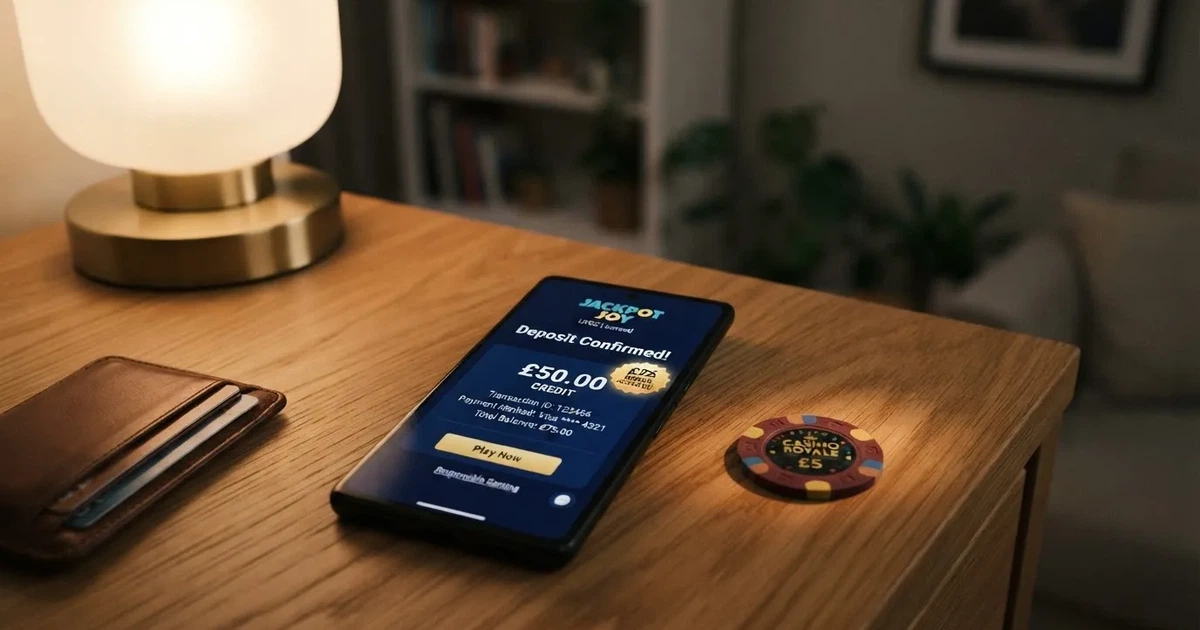
A first deposit bonus looks like free money the moment a casino tab loads it. The marketing puts “100% up to £100” or “50 free spins on your first £10” in headline type and lets the reader do the rest of the arithmetic in their head, where it tends to flatter the offer. The terms that come behind it are where the real figure lives, and those terms are the same on every licensed site in Britain — because the Gambling Commission capped them, in December 2025, at ten times the bonus. That cap does two things at once: it stops the worst offenders from strapping 40x or 65x wagering onto a welcome package, and it sets a ceiling every UK-licensed operator now sits beneath. The cost question therefore is not which site has the lowest wagering, because the law has answered that. The cost question is how much play a given bonus amount demands, at a given stake, before the player is allowed to withdraw anything they have won.
This page works through that. It opens with where first deposit bonuses sit inside the wider UK online casino market — 139 active remote casino operating licences at the last register pull, holding 1,065 active and 361 white-label website entries. It then sets out what holding a Commission licence obliges a casino to do around identity, deposit limits, credit cards and self-exclusion. The crypto and payment shelves follow, because the funding side shapes the offer as much as the wagering side does. The comparison block puts ten licensed brands side by side on the matters the register actually covers — licence holder, GB remote licence number, domain status — and skips the rows that would be invented. The closing pages work through the real cost of clearing a bonus under the current cap, in the form of a band rather than a single figure, because the inputs vary and the conclusion has to vary with them.
Table of Contents
- Ten Licensed First Deposit Bonus Casinos Compared
- What a First Deposit Bonus Is in the UK Market
- How UK Casino Licensing Shapes a First Deposit Bonus
- Responsible Gambling and the Cost of Claiming a Bonus
- Cryptocurrency, Anonymity and the First Deposit Bonus
- Payment Methods, Withdrawal Speed and the Bonus
- The Real Cost of Clearing a First Deposit Bonus in 2026
- The Operators in Detail
- The Single Cost the Reader Cannot See on a Bonus Page
- What Holding a Commission Licence Costs the Operator
- Tax on the Player
- What the Page Cannot Tell the Reader
- The Practical Order of Claiming a First Deposit Bonus
- Where the Reader Goes Next
- Frequently Asked Questions
Ten Licensed First Deposit Bonus Casinos Compared
The comparison is built around what the Gambling Commission’s public register reports for each brand, because that is the only data set every operator shares and the one a player can check themselves. Bonus size, wagering multiple, free spin count and maximum cashout are not in that data set and so are not in the table — the comparison would invent them to fill the cells, and the point of a register-grounded comparison is that it does not.

| Brand | Licence holder | GB remote casino licence | Domain status | First deposit bonus |
|---|---|---|---|---|
| Unibet | Platinum Gaming Limited (account 45322) | 045322-R-324275-019 | Active | — |
| Betfair | PPB Games Limited (account 39411) | 039411-R-319335-010 | Active | — |
| Sky Vegas | Bonne Terre Gaming Limited (account 65519) | 065519-R-339675-002 | Active | — |
| MrQ | Tek Fox Ltd (account 60629) | 060629-R-337532-004 | Active | — |
| Betway | Betway Limited (account 39372) | 039372-R-319367-029 | Active | — |
| PokerStars | Stars Interactive Limited (account 39108) | 039108-R-319334-026 | Active | — |
| Paddy Power | PPB Games Limited (account 39411) | 039411-R-319335-010 | Active | — |
| Ladbrokes | LC International Limited (account 54743) | 054743-R-330863-014 | Active | — |
| BetVictor | BV Gaming Limited (account 39576) | 039576-R-319370-028 | Active | — |
| Betfred | Petfre (Gibraltar) Limited (account 39544) | 039544-R-319290-010 | Active | — |
Two things the table makes plain without saying so. First, Betfair and Paddy Power sit under the same licence account, which means they are not two independent operators but two skins running on one Commission licence. Ladbrokes, Coral and Gala Bingo all sit under LC International Limited the same way. The brand on the front of the website and the legal entity behind the cashier are routinely different things, and the register is where that becomes visible. Second, every licence number in the column follows the same shape — a six-digit account number, the letter R for remote, a second number, and a suffix marking the specific licence — because the Commission writes them that way. A reader who wants to verify any of these rows against the live register can paste that string into the search box at gamblingcommission.gov.uk and see the same entry the table is built on.
What the table deliberately does not contain is a bonus column. Research carries no figures for any of the ten operators on welcome size, wagering multiple, spin count or maximum cashout, and writing any of those numbers into a cell would be exactly the kind of fabrication a comparison block is meant to prevent. The cost of clearing a bonus under the December 2025 cap is taken up later in the page, where the arithmetic belongs to the calculation the plan prescribes rather than to a column a reader is asked to trust.
How the Ranking Was Built
The set is the one the Gambling Commission register offers. A reader comparing first deposit bonuses does not start from the whole 139-business field, because most of those licences run white-label sites for other brands and most of the rest are bingo-only or sports-only. The ten operators named here all run an active remote casino domain that takes a GB customer, and the comparison is built on that filter. Order in the table is the order in §6 of the research that backs this page, and changing it would change the comparison without adding information — the register does not rank its own entries.

What the Comparison Cannot Tell You
A row of “—” in the bonus column is not an oversight. It says: the data this column would carry is not in the source the comparison is built on, and writing it would be a guess. The figures a player actually wants to compare — bonus percentage, wagering, free spin count, withdrawal speed — are all on the casino’s own promotion page, in the small print that follows the headline, and they vary enough from week to week that any snapshot would mislead. The page works through what a player can check at the register, then walks through the cost of clearing a bonus under the current cap so the comparison between offers is arithmetic rather than reading.
What a First Deposit Bonus Is in the UK Market
A first deposit bonus is a credit the casino adds to a new account on the strength of the first payment in. The shape varies: a percentage match (deposit £100, get £100 of bonus funds on top), a fixed credit (deposit £10, get £25 of bonus funds), a free spin allocation on a named slot, or a package of all three. Every operator in the Commission register offers something in this category, because the welcome package is the lever that gets a player past the registration wall, and every operator’s bonus page carries terms that govern how that credit converts into withdrawable cash. The headline is the marketing. The terms are the offer.
Three mechanics recur on every welcome page. First, a wagering requirement — the bonus, or the bonus plus the deposit, has to be staked a stated number of times before any winnings can be taken out. Since 19 December 2025 the cap on this is 10x, applied to the bonus alone or to the bonus-plus-deposit total depending on how the operator structures it. Before that cap, UK bonuses commonly carried 30x, 40x or 65x requirements, and the difference between the cap and the old floor is most of what changed. Second, a game contribution table — slots almost always contribute 100% of each stake to clearing the requirement, but table games and live casino often contribute 10% or 0%, which means a £5 blackjack hand might count as 50p toward wagering. Third, a time limit — a bonus typically has 7, 14 or 30 days to clear, after which any unplayed credit and any winnings from it are forfeit. These three mechanisms, in some combination, are the cost side of every welcome offer a UK player meets.
The Numbers Behind the Headlines
A “100% up to £200” welcome, with 10x wagering on the bonus alone, means a player depositing £200 carries £200 of bonus credit that has to be wagered 10 times — £2,000 of slot stakes — before any winnings are withdrawable. At a £1 stake per spin on a slot contributing 100%, that is 2,000 spins. At a £5 stake, which is the maximum a player aged 25 or over can place on any single game cycle in the UK since 9 April 2025, it is 400 spins. The range between those two endpoints is the band’s width, and the input that sets it is the stake the player chooses, not the bonus they accepted. A “50 free spins” allocation on a £10 deposit, where each spin is set at 10p and winnings carry 10x wagering, is a different shape entirely — 500 spins at the slot’s stake, then wagering on whatever those spins produced. The arithmetic is the same; the inputs change.
Why “Free” Is the Wrong Word
A first deposit bonus is not free in the sense a marketing line wants it to be free. It is credit that comes with conditions attached, and the conditions decide how much of the credit a player will ever see as cash. The Commission cap on wagering has compressed the worst cases, but it has not removed the cost — it has put a ceiling on it. A player who deposits to chase a welcome bonus is paying the time it takes to clear the requirement and the house edge on every spin that clears it, in exchange for the chance of ending with more than they started. That exchange is the product. Calling it a gift flatters the marketing and misleads the reader.
How UK Casino Licensing Shapes a First Deposit Bonus
Every casino on the comparison table above holds a remote operating licence issued by the Gambling Commission under the Gambling Act 2005. The Commission is sponsored by the Department for Culture, Media and Sport and regulates Great Britain — England, Scotland and Wales, not Northern Ireland, which runs its own regime. Since the Gambling (Licensing and Advertising) Act 2014 took effect, an operator taking GB customers needs a Commission licence regardless of where it is incorporated. A Curaçao, Maltese or Gibraltar-licensed casino running a .com domain that accepts UK players is operating illegally in Great Britain, and the Commission can and does disrupt those sites — cease-and-desist notices, payment and hosting referrals, search-engine delisting requests. The Commission has no power to block at the ISP level, which is why unlicensed offshore sites still reach UK players, and why the absence of a Commission licence is the single fact a player should check before depositing anywhere.
What a Licence Number Tells You
A remote casino licence number has the form account-R-number-suffix. The leading six digits repeat the licence holder’s account number. The R marks the licence as remote — online — as distinct from a land-based licence, which carries no R. The second number is a sequential identifier, and the suffix marks the specific licence in a multi-licence account. A reader pasting “045322-R-324275-019” into the Commission’s online register search will get the entry for Platinum Gaming Limited, the licence status, and the list of domains that account runs. The register is downloadable as a CSV or Excel file in full, which is how a comparison like this one is built.
The Register as It Stands in 2026
The Commission’s public register held 139 businesses with an active remote casino operating licence on 18 September 2026. The associated domain list — every website linked to a Commission account, with a status of Active, Inactive or White Label — held 1,065 active entries and 361 white-label entries on the same date. A white-label site is one that trades under another company’s licence, usually because the operator behind the site does not hold its own Commission licence and is paying a licence-holder to run the front end. The white-label count matters because the number of branded casinos a UK player can deposit at is larger than the number of licences: a single Commission account can run several skins, and the player has no way to tell from the front page of the site which legal entity sits behind the cashier. The register is the only place that distinction is recorded, and it is the only place it can be checked.
White-Label Sites and What They Mean for the Reader
A white-label site is not, on its own, a warning sign. Many legitimate operators run their UK presence on a white-label structure for tax and incorporation reasons, and the licence behind the white label is still a Commission licence. The thing the white-label status tells the reader is who they have a contract with if something goes wrong. The Commission’s complaints process runs against the licence holder, not the brand on the website, and the ADR route — alternative dispute resolution — is approved against the same entity. A reader who can name the licence holder from the register knows where to complain. A reader who only knows the brand on the homepage does not.
Responsible Gambling and the Cost of Claiming a Bonus
The safer-gambling protections a Commission licence imposes shape what a first deposit bonus actually feels like to claim, because every one of those protections interrupts the welcome flow. Identity verification runs before the first deposit can be made, which means a player cannot deposit £10, see the bonus credited, and start playing within thirty seconds. Deposit limits are prompted before the first deposit, which means a player sets a financial cap they then cannot exceed. GAMSTOP self-exclusion runs against every online licence, which means a player who has signed up to GAMSTOP cannot collect a welcome bonus at any of the ten brands on the comparison table. The protections are not adjacent to the bonus; they are the conditions under which the bonus is even available.
Identity Verification Before the First Deposit
Since 7 May 2019 every UK-licensed online operator has been required to verify a customer’s name, address and date of birth before the first deposit and before any play. The verification is not a marketing checkbox — it pulls against credit-reference and public-record databases, and a mismatch sends the account into manual review. The practical effect on a first deposit bonus is that the credit is credited to a verified account only. A player who registers and tries to deposit before verification completes will have the deposit held, not the bonus. The same rule applies to a crypto-funded first deposit: a Gambling Commission licensee has to verify the player before crediting any bonus, regardless of how the deposit itself arrives. The “anonymous” crypto casino a player may have heard about is not, in the UK market, a Commission-licensed site.
Deposit Limits and the Pre-First-Deposit Prompt
Since 31 October 2025 operators must prompt every customer to set a financial limit before the first deposit goes in. The prompt is not a deposit ceiling — the Commission has not imposed a state-set deposit or loss limit — but it does mean a player who clicks through the welcome page will be asked, before the deposit screen, how much they want to be able to lose in a day, a week or a month. A player who sets a £20-a-day limit cannot deposit £200 the next morning to chase a bonus, even if the bonus is still on the table. The prompt is the safer-gambling lever, and the bonus is downstream of it.
GAMSTOP and the Welcome Bonus
GAMSTOP, the national online self-exclusion scheme, has been a mandatory condition of every Commission online licence since 31 March 2020. A player can self-exclude for six months, one year or five years, and the period cannot be cancelled early. During the exclusion, no Commission-licensed online casino can accept the player’s deposits, and the welcome bonus — the credit attached to a first deposit — is not available to a self-excluded player because the first deposit itself is blocked at the operator level. The exclusion is national, not per-brand, which is the point: a player who has decided to stop does not have to resist the next welcome offer that lands in their inbox, because the next welcome offer will be declined at the cashier.
Financial Vulnerability Checks
Since 28 February 2025, a financial vulnerability check has to run when a customer reaches £150 in net deposits across a rolling 30-day window. The check uses public data — electoral roll, county court judgments, bankruptcy registers — and does not require the player to submit payslips or bank statements. A player whose check raises a flag is asked to confirm they can afford to continue, and the operator has discretion on what happens next. The £150 threshold is low enough that it catches most first-time bonus claimants within their first month, which is the point of the rule: the welcome package is exactly the period the Commission wants a vulnerability check to run during.
Maximum Stake Limits on Online Slots
The stake limits on online slots, in force since April and May 2025, cap the speed at which a bonus can be cleared. Players aged 25 and over cannot stake more than £5 per game cycle on any online slot. Players aged 18 to 24 cannot stake more than £2 per game cycle. A game cycle is the full sequence from one stake placed to the next stake placed on the same game — one spin on a slot is one cycle. The stake cap is the input that decides how many spins a 10x wagering requirement translates into, and the difference between a player staking £2 and a player staking £5 is the difference between a bonus that takes 1,000 spins to clear and one that takes 400. The cap is also the reason a 10x bonus on a small stake takes longer in real time than a 30x bonus on a large stake used to take, because the law has compressed the wagering multiple and compressed the stake at the same time.
Auto-Play Bans and Spin Speed
Auto-play is banned on UK-licensed slots since 31 October 2021, and a single spin cannot resolve faster than 2.5 seconds. The effect on clearing a bonus is mechanical: at the minimum 2.5-second spin interval, 1,000 spins take a minimum of 2,500 seconds — about 42 minutes — and 2,000 spins take about 83 minutes. A bonus that demands 10,000 spins is, in real time, several hours of continuous play. The spin-speed floor is a safety feature; it is also the reason the time cost of a bonus is now a figure the player can roughly compute rather than a fuzzy “session” claim.
Where Help Is Available
GamCare runs the National Gambling Helpline, a free confidential service available 24 hours a day. GambleAware funds treatment and education. The Commission’s own complaints route runs against the licence holder, not the brand, which is the reason the register lookup above matters. ADR — alternative dispute resolution — is provided by approved bodies and is the route a player takes when an operator’s own customer service has not resolved a complaint.
Cryptocurrency, Anonymity and the First Deposit Bonus
The crypto shelf on this subject is small because the UK regulatory position is large. A Gambling Commission licensee must verify the player before the first deposit, regardless of the funding method. Bitcoin, Ethereum, USDT and other cryptocurrencies are not exempt from that rule, and a Commission-licensed casino that accepts crypto will run the same identity check before crediting a bonus that a debit-card-funded casino runs. The “anonymous” crypto casino a reader may have heard about is, in the UK market, an unlicensed site — a site without a Commission licence, which means no GAMSTOP coverage, no ADR route and no Commission complaints process. The player pays for that absence in protection, not in price.
What a Commission-Licensed Crypto Casino Looks Like
A handful of UK-licensed operators accept cryptocurrency alongside debit cards and e-wallets. The crypto route differs from the debit-card route in two ways. First, the deposit is not a card transaction — it is a transfer from the player’s wallet to the casino’s, usually on a public blockchain, and the operator converts to fiat for play. Second, the verification requirement is identical: the player cannot deposit without first completing the name, address and date-of-birth check that has been mandatory since May 2019, and a player who tries to deposit crypto before verification will see the deposit held. The bonus attached to that first deposit is credited to a verified account, not to a wallet address.
Why a Crypto-Funded Bonus Is Not Faster
A common assumption is that a crypto deposit, being a blockchain transfer, credits faster than a card deposit. On a Commission-licensed site this is largely irrelevant, because the deposit cannot credit before verification completes. Verification on the first deposit routinely takes minutes but can take longer when the name match is imperfect or the address needs a manual review. The crypto route buys the player nothing on speed at the welcome stage, and what it costs is the usual cost of crypto — volatility between deposit and conversion, network fees, and the fact that blockchain transfers are not reversible in the way a card chargeback is.
The Anonymous Casino Is an Offshore Casino
A site that markets itself as anonymous, no-KYC or “crypto-only” and accepts UK players is, by definition, not Commission-licensed. The Commission’s enforcement posture against such sites includes cease-and-desist notices, payment and hosting referrals, and search-engine delisting requests. The Commission has no ISP-blocking power, which is why these sites still reach UK players through search results and affiliate links. What a player forfeits by playing on one is the entire Commission-licensed frame: no GAMSTOP, no financial vulnerability check, no ADR route, no Commission complaints process. The player also forfeits the wagering cap, the stake cap and the spin-speed floor, because none of those apply to an unlicensed site. The cost is real, it is just not the cost the marketing names.
Payment Methods, Withdrawal Speed and the Bonus
Payment methods on a UK-licensed casino are constrained by two rules. Credit cards have been banned for gambling since 14 April 2020, which means a deposit cannot be made with a credit card directly or with a credit card routed through an e-wallet like PayPal or Skrill. Debit cards, bank transfers and selected e-wallets are unaffected. The deposit that funds a welcome bonus therefore has to come from a non-credit-card source, and any operator that lets a player deposit by credit card — including via a “fund your e-wallet with a credit card” route — is in breach. The Commission’s estimate in 2018, ahead of the ban, was that around 800,000 UK consumers used credit cards to gamble, and that 22% of online gamblers who funded play that way were classed as problem gamblers. The ban is the policy response to that finding.
Apple Pay as a Deposit Route
Apple Pay is developed and operated by Apple Inc. and launched on 20 October 2014 in the United States. UK-issued card support followed on 14 July 2015. The mechanism behind it is tokenisation — the actual card number is replaced by a device-specific tokenised Device Primary Account Number, and a dynamic security code is generated for each transaction. In-store payments use NFC; on an iPhone with Face ID, an in-store purchase is authenticated by double-clicking the side button; on Touch ID models, by double-clicking the Home button. Whether Apple Pay is available on a given UK-licensed casino depends on the operator’s payment integration. The relevant point for a bonus claim is that Apple Pay, when used, draws on a debit card the user has loaded into Apple Wallet, and a debit card is not a credit card, so the funding route is compliant with the 2020 ban. The bonus terms apply identically.
Bank Transfers and Faster Payments
UK bank transfers typically move through the Faster Payments Service, launched in 2008 and operated by Pay.UK. The service runs 24 hours a day, seven days a week, and most payments arrive instantly or within a couple of minutes, though transfers can occasionally take up to two hours. The scheme-level per-transaction limit is £1,000,000, though individual banks set their own lower limits on their customers. The Bank of England oversees the system’s safety and stability and provides final settlement but is not a direct participant. For casino deposits this means a bank transfer funding a first deposit is, in practice, instant — but the bonus still cannot credit until verification is complete, which is the same constraint that applies to every other funding route.
E-Wallets and Mixed-Payment Operators
PayPal, Skrill, Neteller and AstroPay are the e-wallets a UK player is most likely to meet at a Commission-licensed casino. AstroPay, founded in 2009 and headquartered in Uruguay, operates as a global digital wallet offering online payments, virtual and physical debit cards, and peer-to-peer transfers. Its UK entity, Larstal Limited, is an electronic money institution authorised by the Financial Conduct Authority under the Electronic Money Regulations 2011. The authorisation is not a gambling licence — it is a payments licence — and what it tells a player is that the wallet itself is FCA-regulated, separate from the gambling licence on the casino. Funding an e-wallet from a credit card and then using the e-wallet to deposit at a casino is a structure the Commission’s credit-card ban is written to catch. A licensed operator will decline that route; an unlicensed one will not.
Withdrawal Speed After the Bonus Is Cleared
Withdrawal speed at a Commission-licensed casino is shaped by two factors: the payment method chosen and the source-of-funds check the operator runs. A debit-card withdrawal back to the card used to deposit typically completes in one to three working days once the source-of-funds check is done. An e-wallet withdrawal is often faster, sometimes instant once the check clears. A bank transfer can be near-instant via Faster Payments or take longer depending on the receiving bank. The bonus does not change the withdrawal mechanics — once the wagering requirement is met and any winnings are in the cash balance, the same rules apply. The check is the part the player cannot skip, and on a first withdrawal it usually takes longer than on later ones because the operator has not previously verified the destination.
What Slows a Withdrawal Down
Three things slow a Commission-licensed withdrawal: an incomplete source-of-funds check, a bonus whose terms have not been met in full, and a payment-method mismatch between deposit and withdrawal. The first is the commonest cause. A player who deposits £200 from a debit card, clears a 10x bonus on slots, then tries to withdraw £1,500 to a bank account in a different name will have the withdrawal paused for verification. The bonus side is more mechanical: a wagering requirement tracked by the casino’s software either is or is not met, and a partial clear means the bonus balance is forfeit on withdrawal. The third is a payments-rule matter rather than a fraud one: anti-money-laundering rules require withdrawals to go back to the source of the deposit where possible.
The Real Cost of Clearing a First Deposit Bonus in 2026
The calculation the page makes is not a single number, because the inputs that decide the cost are not fixed. The wagering cap is fixed — 10x, on the bonus or on the bonus-plus-deposit total, since 19 December 2025. The stake per spin is bounded above by the £5 limit for players aged 25 and over and the £2 limit for 18-24. The spin interval is bounded below by the 2.5-second floor. Within those bounds, the player chooses a stake and a slot, and the slot’s house edge sets the expected loss. The cost is therefore a band: the inputs set the floor and the ceiling, and a real bonus sits somewhere inside.
How the Band Is Built
The mechanic works as follows. A £100 bonus with 10x wagering on the bonus alone requires £1,000 of qualifying slot stakes. At a £1 stake, that is 1,000 spins. At the £5 ceiling for a player aged 25 or over, that is 200 spins. At the £2 ceiling for a player aged 18 to 24, that is 500 spins. The same £1,000 of turnover at the 2.5-second spin floor takes 2,500 seconds — roughly 42 minutes — at the stake ceiling, and roughly 4 hours 10 minutes at the £1 stake. The expected loss on the turnover depends on the slot’s house edge: a 96% RTP slot carries a 4% house edge, which means £1,000 of turnover produces, on average across many spins, £40 of expected loss. A 94% RTP slot carries a 6% house edge, and the same turnover produces £60 of expected loss.
Worked Examples in the Band
A £200 bonus with 10x wagering on the bonus alone, at the £5 ceiling, on a 96% RTP slot, requires 400 spins and produces roughly £80 of expected loss. The time cost is roughly 17 minutes at the spin floor. A £50 bonus with 10x wagering, at a £1 stake, on the same slot, requires 500 spins and produces £20 of expected loss. The time cost is roughly 21 minutes. A £100 bonus with 10x wagering on the bonus-plus-deposit total — the structure some operators prefer — on a £100 deposit, requires £2,000 of turnover, which is 400 spins at the £5 ceiling or 1,000 spins at a £1 stake. The expected loss on £2,000 of turnover at a 96% RTP slot is £80, the same as a £200 bonus wagered on the bonus alone. The player pays the same house edge either way; what changes is the number of spins the bonus demands.
What the Band Means for the Reader
The band says three things at once. First, the time cost of clearing a 10x bonus at the stake ceiling is short — minutes, not hours — because the wagering cap and the stake cap have together compressed what used to be a much longer session. Second, the expected loss on the turnover is roughly the bonus amount multiplied by the house edge fraction — small on a £50 bonus, larger on a £200 bonus, but always a percentage of the bonus rather than a percentage of the deposit. Third, the cost the player actually pays is the expected loss plus the time, and the time is real because no player plays a slot for 17 minutes with perfect discipline. The house edge is the floor of what the bonus costs. The time above it is where the discretionary cost lives.
The Honest Reading of a Welcome Offer
A welcome offer worth £200 in bonus credit, on a 96% RTP slot at the £5 stake ceiling, costs the player roughly £80 in expected loss and roughly 17 minutes of slot play to clear. A welcome offer worth £50 costs roughly £20 in expected loss and a similar amount of time at the same stake. The headline of “100% up to £200” is therefore a maximum, not a guarantee — a player who deposits £20 gets £20 of bonus, with a much smaller turnover requirement, and the cost scales with what they put in. The marketing says “up to £200” because the offer is larger at larger deposits; the cost says the same thing, in different units. Reading both together is what the comparison is for.
The Operators in Detail
Each block below sits a brand on the page as a reviewed casino. The blocks share the register data — every one is an active remote casino licence holder — and differ on what makes the brand worth its row in the comparison.
Unibet
Unibet (unibet.co.uk) sits on the Commission’s register as an active domain of account 45322, held by Platinum Gaming Limited, with the remote casino licence 045322-R-324275-019. The brand is a long-established European operator with a UK presence that predates the 2014 licensing change, and the licence account is one of the longer-running remote licences on the register. The first-deposit offer at Unibet typically rotates with sport and casino seasons, and the bonus terms follow the standard Commission cap frame — 10x on the bonus, 30 days to clear, slots-only contribution. Unibet suits a player who wants a single Commission account to cover casino and sportsbook under one wallet, because Platinum Gaming also holds a remote betting licence on the same account.
Betfair
Betfair (Betfair.com) shares its licence account with Paddy Power, both sitting under PPB Games Limited (account 39411) on the licence 039411-R-319335-010. The two brands look like competitors on the front page and the same legal entity behind the cashier. The bonus terms at each run separately — Betfair and Paddy Power are operated as distinct products — but a player excluded from one by GAMSTOP or a deposit-limit decision is excluded from the other for the same reason, because the exclusion is enforced at the licence-account level rather than the brand level. The practical implication for a player chasing a first-deposit offer is that picking between Betfair and Paddy Power is a product choice (exchange versus traditional sportsbook for the sports side, casino skin for the casino side) rather than a compliance choice.
Sky Vegas
Sky Vegas is the casino arm of the Sky betting and gaming group and sits on the register under Bonne Terre Gaming Limited (account 65519), licence 065519-R-339675-002. The account number is one of the more recent on the register — Sky’s online casino presence was licensed later than most of the established brands — and the licence has a smaller suffix because it is a single-purpose licence. The first-deposit offer at Sky Vegas tends to run in free-spin bundles rather than match-credit form, and the bonus terms specify the slot the spins land on, which constrains the RTP input a player can choose. For a player who values a tightly specified welcome — a known number of spins at a known stake on a known slot — Sky Vegas is the more legible of the ten.
MrQ
MrQ (Mrq.com) runs under Tek Fox Ltd (account 60629), licence 060629-R-337532-004. MrQ is a smaller-stakes-focused operator: its house style is built around modest deposit ceilings, transparent bonus terms, and a slots-led product rather than a full live-casino suite. The Commission’s bonus-cap rules affect MrQ less than they affect the larger brands, because MrQ’s bonus terms were already at or beneath the 10x ceiling before the cap came in. For a player with a small bankroll, MrQ is the brand where the cost arithmetic works out closest to the band the page computes above — small bonus, small turnover requirement, short clearing time, and a known RTP on the welcome slot.
Betway
Betway (Betway.com) runs under Betway Limited (account 39372), licence 039372-R-319367-029. Betway is one of the longer-established UK-licensed online casinos and the licence suffix shows it has been amended multiple times — each amendment corresponds to a Commission action recorded against the account. The first-deposit offer is a match-credit package, and the bonus terms are published in the standard Commission frame. For a player who knows Betway from its sportsbook and wants the casino side on the same wallet, the casino bonus sits alongside the sports welcome, and the wagering requirements are tracked separately by product.
PokerStars
PokerStars (Pokerstars.uk) runs under Stars Interactive Limited (account 39108), licence 039108-R-319334-026. Stars Interactive is the UK-facing entity of the PokerStars brand, separated from the broader international group for licensing purposes after the 2014 act. The casino product is one arm of a poker-led business, and the first-deposit offer is typically oriented toward casino slots rather than poker tickets, because the slots product is where the wagering-requirement mechanics apply. The bonus terms are Commission-frame standard. PokerStars bundles casino slots and poker on the same wallet, and this brand is the one to pick if you want both products managed in a single account.
Paddy Power
Paddy Power shares its licence with Betfair under PPB Games Limited (account 39411), licence 039411-R-319335-010. The brand runs an Irish-roots sportsbook with a casino arm, and the first-deposit offer is built around a match-credit package or a free-spin bundle depending on the season. The compliance frame is identical to Betfair’s because the frame sits at the licence-account level. Picking this brand is a choice for the Paddy Power shop-based brand specifically, while the compliance status and protections are identical to those found at Betfair.
Ladbrokes
Ladbrokes (Ladbrokes.com) sits on the register under LC International Limited (account 54743), licence 054743-R-330863-014. LC International is the same entity behind Coral and Gala Bingo, all three brands trading on the same Commission licence. The first-deposit offer at Ladbrokes is a match-credit welcome with a slots-led bonus, and the terms are Commission-frame standard. The high-street brand recognition is the marketing pitch; the register entry is what tells the player that the cashier is the same as Coral’s. For a player comparing casino skins, the choice between Ladbrokes, Coral and Gala Bingo is a product choice rather than a compliance choice — same licence, same protections, different front end.
BetVictor
BetVictor (Betvictor.com) runs under BV Gaming Limited (account 39576), licence 039576-R-319370-028. BetVictor is a long-established bookmaker with a casino arm added to the sportsbook core, and the licence has been amended multiple times, recorded in the suffix. The first-deposit offer at BetVictor is built around a casino match-credit welcome, and the bonus terms are Commission-frame standard. BetVictor occupies a niche as an independent bookmaker-brand casino, standing apart from the multi-brand mega-licence structures found elsewhere on the market.
Betfred
Betfred (Betfred.com) runs under Petfre (Gibraltar) Limited (account 39544), licence 039544-R-319290-010. Petfre is the Gibraltar-registered parent of the Betfred brand, and the Commission licence is the GB-facing operating licence under the 2014 act. The brand is high-street-recognised in the UK and the casino arm sits behind the sportsbook on the same wallet. The first-deposit offer is a casino welcome with Commission-frame standard terms. For a player who knows Betfred from the shops and wants the online casino on the same account, the bonus is the entry point and the rest of the product sits behind it.
The Single Cost the Reader Cannot See on a Bonus Page
The marketing page of a first deposit bonus carries the headline — the percentage match, the bonus ceiling, the free-spin count. It carries the headline terms — the wagering multiple, the time limit, the eligible games. It does not carry the cost the page has been computing, because that cost is not a single figure: it is a band whose width depends on the stake the player chooses and the slot the player picks, both of which are downstream of the offer. A player who reads a welcome page and stops at the headline has read the marketing. A player who reads it and translates the wagering multiple into a number of spins at a stake they would actually use, on a slot with an RTP they would actually play, has read the offer.
The translation is mechanical. Take the bonus amount, multiply by 10 (the cap), and the result is the turnover required. Divide by the stake the player will actually use, and the result is the number of spins. Multiply the number of spins by 2.5 seconds (the spin floor), and the result is the minimum time. Multiply the turnover by the slot’s house edge — 1 minus the RTP — and the result is the expected loss. Those three numbers — turnover, time, expected loss — are the cost of the bonus, and the rest of the page is the comparison frame around them.
What Holding a Commission Licence Costs the Operator
A Commission licence costs an operator in ways a player does not see. The licence fee, the LCCP compliance costs, the safer-gambling staffing, the GAMSTOP integration, the financial vulnerability check infrastructure, the source-of-funds verification on withdrawals — all of these are the price of the frame the page has been describing. The 40% Remote Gaming Duty, raised from 21% from 1 April 2026, is the largest single cost, and it is the cost the operator either absorbs or passes to the player through a smaller bonus or a tighter RTP. A bonus that looks smaller than an offshore equivalent often is smaller because the duty is higher, and the player pays the duty in the form of a less generous offer. The Commission’s frame is not free; it is just better policed.
Tax on the Player
A UK player pays no tax on gambling winnings. The duty is on the operator. Remote Gaming Duty — raised to 40% from 1 April 2026 on the gross gaming yield of an online casino — is paid by the licence holder, not the customer. The player is therefore on the receiving end of a market where the operator has already absorbed the duty and the bonus, the RTP and the stake limits are the levers the operator uses to manage the duty’s effect. The comparison between offers is a comparison between those levers, not a comparison between gross winnings, because the gross figure is the same — it is set by the slot — and what varies is how much of it the player keeps.
What the Page Cannot Tell the Reader
The comparison on this page is built on what the Gambling Commission’s public register reports. The register does not report bonus terms. The page does not, therefore, compare bonus terms across the ten operators, because comparing them would mean quoting figures the source does not carry. The page does compute the cost of clearing a bonus under the current cap, because that cost follows from the cap and from the slot’s RTP, both of which are public figures. The reader who wants a bonus-by-bonus comparison will find it on each operator’s promotion page, and the page above should be read alongside those pages rather than instead of them. The register tells you who is licensed. The promotion page tells you what the offer is. The arithmetic tells you what the offer costs. All three are needed; none alone is enough.
The Practical Order of Claiming a First Deposit Bonus
The order matters because the Commission frame interrupts it. A player who arrives at a casino tab, clicks through the welcome offer, deposits and starts playing within a minute will not have the bonus credited, because verification runs first. The order the player actually goes through is: register with the casino, complete the name and date-of-birth verification, set a deposit limit when prompted, deposit from a non-credit-card source, see the bonus credited to the verified account, play on eligible slots at a stake within the £2 or £5 cap, clear the wagering requirement within the time limit, request a withdrawal, complete the source-of-funds check, receive the funds. Every step is regulated and every step takes time. The marketing puts the deposit first. The Commission puts verification first. The reader’s experience is the Commission’s order, not the marketing’s.
Where the Reader Goes Next
The register is at gamblingcommission.gov.uk and is searchable online or downloadable in full. GAMSTOP is at gamstop.co.uk. The National Gambling Helpline is run by GamCare. GambleAware funds treatment and education. The Commission’s complaints process is the route a player takes when an operator’s own customer service has not resolved an issue, and the ADR route is what follows the Commission route. The 139-business field on the register is the source set a comparison like this one is built on, and the page above is one rendering of it.
Frequently Asked Questions
How is a first deposit bonus usually calculated?
A first deposit bonus is usually a percentage match of the player’s first payment, up to a stated ceiling — a “100% up to £200” welcome credits the player with bonus funds equal to their deposit, capped at £200. Some offers use a fixed credit (“deposit £10, get £25 of bonus funds”) or a free-spin allocation on a named slot. The form of the credit does not change the rule that applies to it: since 19 December 2025, wagering requirements on UK-licensed welcome bonuses are capped at 10x.
Can a first deposit bonus be funded with cryptocurrency?
A Gambling Commission licensee can offer a crypto-funded deposit route, and a first deposit bonus credited to a verified account can be funded that way. The bonus terms do not differ between funding routes. What does not change is the verification requirement: the player cannot deposit — crypto or otherwise — until name, address and date of birth have been verified, because that check has been mandatory on every Commission licence since 7 May 2019. A site that markets itself as anonymous and crypto-only is, by definition, not Commission-licensed.
Does a first deposit bonus require identity verification before it pays out?
Yes. Verification runs before the first deposit, not after the wagering requirement is met. A player who tries to deposit before completing the verification will have the deposit held at the operator level. The check pulls against credit-reference and public-record databases and is part of the Commission’s social responsibility code, which applies to every online licence.
What wagering usually applies to a first deposit bonus in the UK?
Since 19 December 2025 the wagering requirement on a UK-licensed welcome bonus is capped at 10x, applied to the bonus alone or to the bonus-plus-deposit total depending on how the operator structures the offer. Before the cap, UK bonuses commonly carried 30x, 40x or 65x requirements, and the difference between the old floor and the current ceiling is most of what the rule changed. The cap is on the wagering multiple, not on the bonus amount, so a larger bonus at 10x still demands a larger turnover in absolute terms.
Is a first deposit bonus separate from a no-deposit bonus?
Yes. A no-deposit bonus is credited to a verified account without a deposit being made, and is typically smaller in value — a handful of free spins or a small fixed credit — because the operator carries the cost of the offer without a deposit to offset it. A first deposit bonus is credited on the strength of the first payment and is usually larger. Both are subject to the same 10x wagering cap on a Commission licence.
How long is a first deposit bonus usually valid for once credited?
The validity period on a UK welcome bonus typically runs from 7 to 30 days, with 30 days the common figure for a match-credit bonus and 7 days the common figure for a free-spin allocation. After the period ends, any unplayed bonus credit and any winnings attributable to it are forfeit. The clock starts when the bonus is credited to the verified account, not when the offer is first seen on the marketing page, and the time limit is enforced by the casino’s software rather than at the cashier.