
Latest No Deposit Casino Bonuses UK 2026: The Real Picture from the Register
A no-deposit bonus costs the casino something — it is, after all, free money to play with, handed out before the player has ever put a pound in. That is why the headline figure matters less than what sits beside it: how many times the bonus has to be turned over, how long it lasts before it expires, whether winnings can ever be cashed out at all. A £10 bonus with a 10x wagering requirement asks for £100 of real-money play before any win becomes withdrawable. At the other end, a £25 bonus behind the same 10x cap asks for £250. The arithmetic is honest either way; the marketing is rarely that honest about which one it is selling.

This page is a reader-side look at the latest no-deposit casino bonuses at UK-licensed sites in 2026. Ten operators appear below, all of them on the Gambling Commission’s public register on 18 September 2026: 139 businesses held an active remote casino operating licence that day. The page follows the register, not the affiliate boards, and the 10x wagering cap that came in on 19 December 2026 runs through every offer mentioned here.
Data current as of 5 November 2026, cross-checked against the Gambling Commission’s public register of gambling businesses.
Table of Contents
- How UK No-Deposit Bonuses Actually Work in 2026
- The UK Legal Frame Around a No-Deposit Bonus
- Responsible Play Around a No-Deposit Bonus
- How New UK Casino Sites Present No-Deposit Offers on Mobile
- The Newest UK-Licensed Casino Sites in 2026
- How the Register Holds Up: A Side-by-Side Reading
- The 10x Wagering Cap, Stated as a Band
- Where a No-Deposit Bonus Goes Wrong
- The Wider Picture: What 2026 Looks Like for UK No-Deposit Offers
- Final Word
- Frequently Asked Questions About No-Deposit Bonuses at UK Casinos
How UK No-Deposit Bonuses Actually Work in 2026
A no-deposit bonus is the simplest casino promotion in form and one of the most heavily conditioned in practice. The casino credits the player with bonus funds — sometimes bonus spins on a named slot, sometimes a small cash balance — without asking for a deposit first. The player can use it on selected games. Anything won from it sits as bonus money, not as real cash, until a set of conditions has been met.
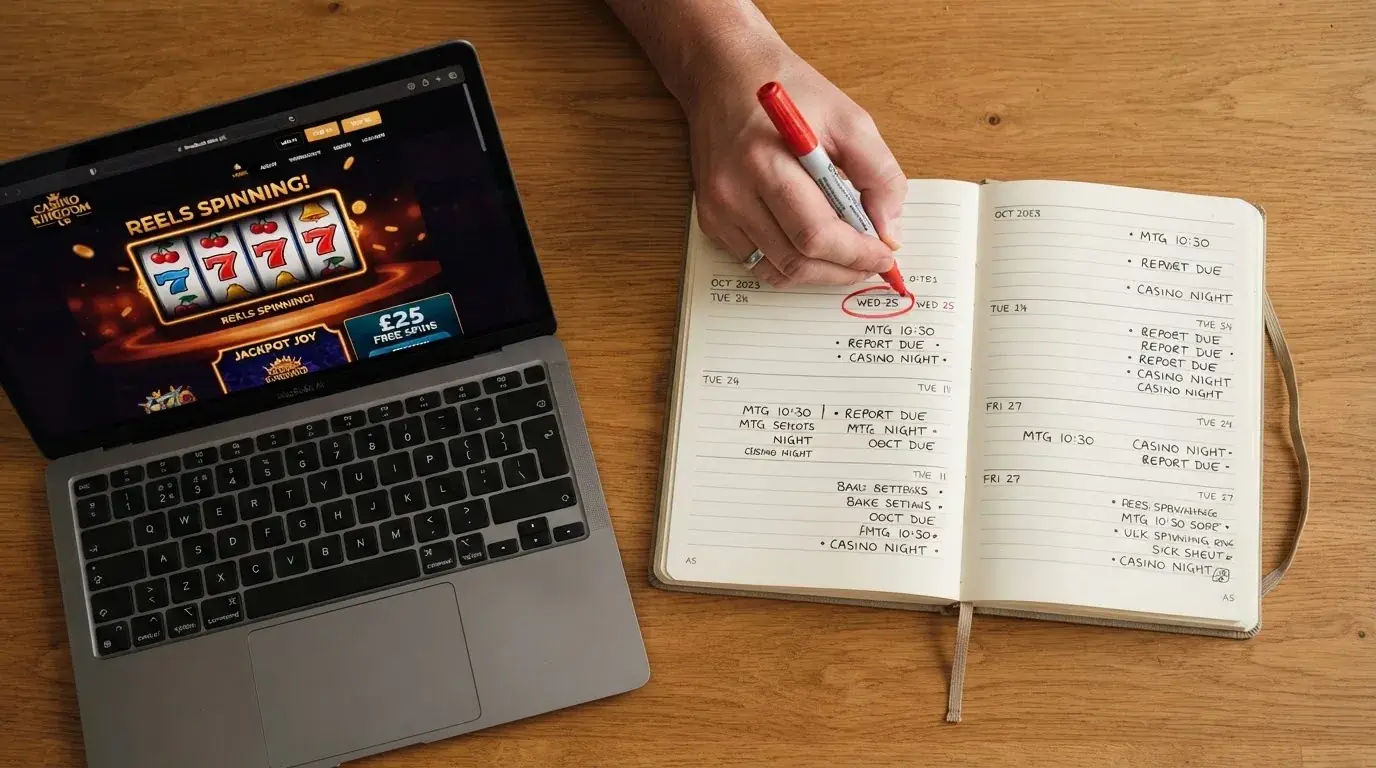
Three conditions do nearly all of the work:
- Wagering requirements. The bonus has to be staked a stated number of times before winnings become withdrawable. In the UK, since 19 December 2026, that multiplier is capped at 10x for any bonus offered to players. So a £5 bonus asks for £50 of play; a £20 bonus asks for £200.
- Expiry. Bonuses expire. A 7-day window is common, a 30-day window is generous, a 24-hour window is the tightest this market still uses. Anything left unplayed at the deadline is removed.
- Withdrawal cap. Even after the wagering requirement is cleared, many no-deposit offers carry a maximum cashout — a ceiling on what the player can actually withdraw. This is the condition that turns a £50 bonus win into a £25 withdrawal, and it is the one marketing pages tend to bury in small print.
A reader should treat the bonus headline as a starting figure and the small print as the price.
What the register says about the UK market in 2026
The Gambling Commission’s public register is the whole test of whether a brand holds a UK remote casino licence. On 18 September 2026 it listed 139 businesses with an active remote casino operating licence, and the register’s domain table recorded 1065 active and 361 white-label domain entries against those accounts. A white-label site trades under another company’s licence — the same account number, a different brand on the front. Several operators on the ranking below sit under shared licensees: Ladbrokes, for instance, sits under LC International Limited, alongside other brands the same company runs; Unibet and 32Red are both operated under Platinum Gaming Limited’s licence. The register says so plainly; the front pages of those brands rarely do.

A remote casino licence number on the register follows a fixed pattern: six digits for the licence holder’s account, the letter R for a remote (online) licence, a sequence number, and a suffix. MrQ’s licence, for example, reads 060629-R-337532-004 — account 60629, Tek Fox Ltd. Knowing the pattern lets a reader check any brand against the register in under a minute.
What a no-deposit bonus looks like in practice
A player signing up at a UK-licensed casino in 2026 will typically meet one of three offers:
- Free spins on a named slot. Often the most modest in headline value, often the most generous in real terms because the wagering requirement is applied to the spin winnings, not to a deposit.
- A small cash bonus. £5 to £25 is the typical band; £50 is unusual outside heavy promotional periods. The wagering requirement is applied to the bonus amount.
- A timed offer. Free play for an hour, or a fixed number of spins on a specific title, with the bonus balance wiped at the end of the session regardless of position.
In every case, the player must verify name, address and date of birth before the first deposit or any play — that rule has been in force since 7 May 2019, and the 10x wagering cap that arrived in December 2026 sits on top of it. Anonymous play is not possible at a licensed UK site, no-deposit bonus or otherwise.
The UK Legal Frame Around a No-Deposit Bonus
The 10x wagering cap is the headline change of the last twelve months, but it sits inside a wider set of rules that govern every bonus a UK player can claim. Three of them shape what a no-deposit offer can and cannot be.
The Gambling Commission and the Gambling Act 2005. The Commission is the regulator for Great Britain — England, Scotland and Wales. Northern Ireland runs on its own regime. Since the Gambling (Licensing and Advertising) Act 2014, any operator taking customers in Great Britain needs a Commission licence wherever it is based; a Curaçao, Maltese or Gibraltar licence is not a substitute for a UK one. The licence number is on the register; the licencee’s name sits against it.
Wagering requirements capped at 10x. Since 19 December 2026, any bonus offered by a UK-licensed operator carries a maximum 10x wagering requirement. Mixed-product bonuses — bet on sport, receive casino spins — are also banned. The cap applies to the bonus amount itself: a £10 bonus asks for £100 of staking before winnings are real money.
Credit cards banned since April 2020. From 14 April 2020, no credit card — including a credit card routed through an e-wallet — may fund any gambling product in Great Britain, with a narrow exception for non-remote lotteries paid for face-to-face. Debit cards and bank transfers were unaffected. The Commission estimated that around 800,000 UK consumers used credit cards to gamble in 2018, and found that 22% of online gamblers who used credit cards were classed as problem gamblers — the figure behind the ban.
What the offshore route costs the player
A casino licensed in Curaçao, Malta or Gibraltar but not in the UK can take players based anywhere; it cannot lawfully take players in Great Britain without a Commission licence. Section 33 of the Gambling Act 2005 makes providing gambling to people in Great Britain without a licence an offence. The Commission disrupts illegal sites — cease-and-desist notices, search-engine delisting, payment and hosting referrals — but it has no ISP-blocking power. The cost of any offer at such a site is what the player loses in protection: no GAMSTOP, no Commission complaints route, no approved ADR, no recourse if the operator refuses to pay out.
The point is not that offshore sites are always dishonest. The point is that the safety net a UK licence provides is itself a product the player is paying for, and it disappears the moment the licence does.
Player protection beyond the bonus terms
Every UK-licensed online casino must take part in GAMSTOP, the national online self-exclusion scheme. A player who signs up for six months, one year or five years cannot open an account at any participating site for the period chosen — and the choice cannot be cancelled early. Since 31 March 2020, GAMSTOP enrolment has been a mandatory condition of every online licence.
Two further limits shape the no-deposit offer itself:
- Stake limits on online slots. £5 per game cycle for players aged 25 and over, in force from 9 April 2025; £2 for 18-24s, from 21 May 2025.
- Deposit limit prompts. Operators must prompt a customer to set a financial limit before the first deposit, in force from 31 October 2025. There is no state-set ceiling; the operator has to ask, and the player has to set or decline.
Financial vulnerability checks run at £150 in net deposits across a rolling 30 days, using public data only — in force from 28 February 2025. The wider financial risk assessments the Commission has signalled have not yet come into force. The National Gambling Helpline (GamCare) and GambleAware are the two main signposts for anyone whose play has stopped being a choice.
Responsible Play Around a No-Deposit Bonus
A no-deposit bonus is a small promotion at the edge of the casino’s marketing funnel: it gives a player a reason to register, verify and explore, in the hope they stay. From the player’s side, it is the point at which a real-money relationship with the operator begins — and the safer-gambling tools exist precisely so that the player, not the operator, decides what that relationship looks like.
Three tools are worth knowing before claiming any of the offers below.
Deposit limits. A player can set a daily, weekly or monthly deposit ceiling before or after signing up. The operator has to ask before the first deposit. A £0 limit stops deposits altogether; the bonus, if it has been credited already, may still be played through the wagering requirement, but no further money can go in.
Time-outs. A short break from a single site, from 24 hours to six weeks. Useful when the offer’s expiry window looks tight, or when the wagering requirement feels like it is taking longer than the player expected.
GAMSTOP. A six-month, one-year or five-year block on every UK-licensed online casino, slot site and bingo site. Cannot be reversed early. GAMSTOP enrolment is the right move when several sites are competing for the same time and money.
Reality checks — pop-up reminders of how long the player has been on the site — and auto-play bans (a spin may not start faster than 2.5 seconds; losses disguised as wins are banned) are set by the operator, not the player. They are the floor, not the ceiling.
The arithmetic the marketing pages leave out
A £10 no-deposit bonus with a 10x wagering requirement, played on a slot at the £2 stake cap that applies to 18-24s, asks the player to run 50 spins at £2 each. Each spin takes at least 2.5 seconds under the speed limit, so the minimum play time is 125 seconds — just over two minutes. A £25 bonus at the same cap asks for 125 spins, or just over five minutes. The arithmetic is not heavy; the catch is that the wagering requirement is applied to the bonus amount, not the win, and any spin that returns less than the stake eats into the bonus balance without producing a withdrawal.
For older players on the £5 per-spin cap, the same £10 bonus needs 20 spins, the £25 bonus needs 50 spins. Spins take longer because the higher stake buys fewer rounds, and the player spends more time at the table. This is the part the marketing copy never quite gets to: the time the offer costs is part of its price.
What the offer actually costs the player
A £10 no-deposit bonus has an expected cost to the casino of roughly 95p to £1, on the typical return-to-player figure for an online slot. The casino’s marketing budget absorbs that. The player’s cost is the time it takes to clear the wagering requirement, the games the bonus restricts play to, and any maximum cashout that sits on top. None of these is hidden, but none of them is in the headline either.
The right comparison is not bonus A versus bonus B. It is bonus A versus the alternative of opening an account with no offer at all, taking the deposit-limit prompt seriously, and playing only what was already budgeted. The bonus changes the entry cost, not the underlying mathematics of the games.
How New UK Casino Sites Present No-Deposit Offers on Mobile
The newest UK-licensed casino sites are mobile-first by default — the bulk of registration traffic, deposit traffic and gameplay traffic at a modern operator comes through a phone. The no-deposit offer has to work in that frame: visible on a small screen, claimable in two or three taps, and playable without installing an app.
Three patterns are common across the operators reviewed below.
Browser-first, app-optional. The casino runs as a responsive website that adapts to phone and tablet screens. The no-deposit bonus is claimed during registration; the player is taken straight to the eligible game. An app may exist — it is rarely required to claim or to play.
Native app with a browser fallback. The operator pushes the app for daily play, but the registration flow and the no-deposit claim sit on the website. The app is for the player who stays; the browser is for the player who is sampling.
App-exclusive no-deposit bonus. The rarer case. The operator reserves a specific no-deposit offer — usually free spins, sometimes a small cash bonus — for players who download and register through the app. It is a marketing tool aimed at retention rather than acquisition.
Across all three patterns, the underlying licence does not change. A UK-licensed casino is a UK-licensed casino on every screen it runs on, and the safer-gambling tools, the wagering cap and the GAMSTOP link apply on phone and desktop alike.
What the player actually does on the phone
A typical no-deposit flow on a phone in 2026 runs through four steps:
- Tap a registration link. The site opens in the phone’s browser; no app install is required.
- Enter name, address and date of birth. Verification runs in the background; the player does not need to upload a document for the bonus to be credited, though the operator will ask for one before any withdrawal.
- Accept the bonus (or decline). UK sites are required to make the bonus terms visible before the player opts in.
- Play through the wagering requirement on the eligible game or games.
A player who wants to install the app does so after step 4, by which point the account is already verified. The app is for return visits; the browser is the front door.
The Newest UK-Licensed Casino Sites in 2026
Ten operators sit on the ranking below. Every one of them is on the Gambling Commission’s public register as an active remote casino operating licence holder on 18 September 2026. The ranking is a description, not a recommendation: the page describes what each operator offers, the licence it sits on, and the no-deposit promotion attached to the brand where one is on offer. The reader picks.
The order runs from newer licence accounts to older ones — by the date the Commission issued each remote casino licence, not by bonus size or market share.
MrQ — the independent line on no-deposit simplicity
MrQ runs under Tek Fox Ltd (account 60629) and holds remote casino operating licence 060629-R-337532-004; the brand sits on the register as an active entry against that licence. The brand is unusual in the UK market for being independently run rather than white-labelled under a larger operator, and the no-deposit promotion attached to the site has historically been a free-spins offer with a small cash alternative. The wagering requirement sits at the 10x UK cap where it is offered.
For a player who values clarity over headline size, MrQ’s offering reads as straightforward: a free-spins bonus on a named slot, transparent expiry, no deposit required to claim. The trade-off is that the headline figure is modest — this is a brand built around small-stakes, frequent play rather than large promotional events.
Unibet — the established line on no-deposit variety
Unibet runs under Platinum Gaming Limited (account 45322) and holds remote casino operating licence 045322-R-324275-019; the unibet.co.uk domain is on the register as an active entry against that licence. Unibet has been on the UK market for years and tends to offer a broader range of promotions than the smaller operators — including, periodically, a no-deposit offer aimed at new registrations.
The variety cuts both ways. A player who wants choice between a free-spins no-deposit bonus and a small cash no-deposit bonus is well served; a player who wants a single clear offer to compare against may find the marketing rotates faster than the small print can keep up. The 10x wagering cap applies to any bonus on the site.
Betway — the mainstream line on no-deposit
Betway runs under Betway Limited (account 39372) and holds remote casino operating licence 039372-R-319367-029; the Betway.com domain is listed as an active entry. Betway is one of the larger UK-facing sportsbook-casino combinations and tends to attach its no-deposit offer to a specific slot, with the bonus tied to the wagering requirement on that title’s winnings.
For a player used to the Betway sportsbook, the casino side runs as a quieter annex of the main product; the no-deposit offer is a way into the casino product rather than a standalone attraction. The terms are the standard UK-licensed set: 10x wagering, deposit-limit prompt, GAMSTOP enrolment available.
Grosvenor Casinos — the land-based line on no-deposit
Grosvenor Casinos runs under Rank Interactive (Gibraltar) Limited (account 57924) and holds remote casino operating licence 057924-R-334666-005; the Grosvenor Casinos domain is listed as an active entry. The brand has a UK high-street casino estate behind it, which shapes the online offering: the no-deposit promotion, where it runs, tends to mirror the kind of free-play offer a land-based casino might extend to a new member.
For a player who knows the Grosvenor halls, the online product is a continuation of the same loyalty logic; for a player who has never set foot in one, it is a casino brand without a clear peer comparison. The remote licence is the same UK regime as any other.
kwiff — the spontaneous line on no-deposit
kwiff runs under Eaton Gate Gaming Limited (account 44448) and holds remote casino operating licence 044448-R-323408-017; the Kwiff.com domain is listed as an active entry. The brand’s pitch is unpredictability — surprise offers, surprise odds boosts, surprise bonuses — and the no-deposit promotion fits the pattern by appearing and disappearing on a short notice. A player who checks the site weekly is more likely to meet a kwiff no-deposit offer than a player who does not.
For a player who likes promotional variety and is comfortable checking back regularly, kwiff is the more rewarding entry; for a player who wants a stable, predictable offer, the brand’s pitch works against them. The licence is standard UK.
Casumo — the gamified line on no-deposit
Casumo runs under Recro Limited (account 61549) and holds remote casino operating licence 061549-R-336718-002; the Casumo.com domain is listed as an active entry. Casumo has been on the UK market for a decade and structures its promotions around progression — a no-deposit bonus is often the first step in a longer onboarding sequence, with deposit bonuses and reload offers layering on top.
For a player who values the long arc of an operator relationship, Casumo’s structure rewards repeated play; for a player who only wants the no-deposit offer and nothing after, the brand’s onboarding logic delivers less value. The wagering cap is the standard 10x.
Betfair — the exchange line on no-deposit
Betfair runs under PPB Games Limited (account 39411) and holds remote casino operating licence 039411-R-319335-010; the Betfair.com domain is listed as an active entry. Betfair’s online casino sits beside its better-known betting exchange, and the no-deposit promotion tends to be a quieter, slot-focused offer aimed at players who have come over from the exchange.
For an exchange user curious about casino play, Betfair is the most natural landing; for a casino-only player, it is one of many options rather than a clear stand-out. The 10x wagering cap applies.
Ladbrokes — the heritage line on no-deposit
Ladbrokes runs under LC International Limited (account 54743) and holds remote casino operating licence 054743-R-330863-014; the Ladbrokes.com domain is listed as an active entry. The Ladbrokes brand predates the online market by a century and the casino product is one of several under the LC International umbrella — alongside Gala Bingo and other brands the same company runs. The no-deposit offer, where it runs, sits inside a wider promotional programme that includes sportsbook and bingo bonuses.
For a player already using the LC International ecosystem, the no-deposit offer is a familiar shape; for a player comparing standalone casino sites, the brand’s heritage reads as a small advantage and a small obstacle — the site is built for a long-tenured player, not a first-time visitor sampling the market. The UK licence is the same.
Midnite — the newer line on no-deposit
Midnite runs under Dribble Media Limited (account 42647) and holds remote casino operating licence 042647-R-321653-022; the Midnite.com domain is listed as an active entry. Midnite is a newer UK-facing brand, and its no-deposit offer, where it runs, tends to be a small, sharply-targeted promotion — free spins on a specific slot, a short expiry, the standard 10x wagering requirement.
For a player who likes being early to a brand, Midnite is the right entry; for a player who values the depth of an established operator’s library, the brand’s smaller catalogue is a constraint. The licence is the standard UK regime.
32Red — the casino-purist line on no-deposit
32Red runs under Platinum Gaming Limited (account 45322) and holds remote casino operating licence 045322-R-324275-019 — the same licence as Unibet, since both brands sit under the same licensee. The 32red domain is listed as an active entry. 32Red’s pitch has always been a casino-purist brand: no sportsbook, no exchange, no bingo — slots, table games, live casino. The no-deposit offer fits that frame.
For a player who wants a casino-only brand with a long UK history, 32Red is a natural fit; for a player who wants one operator to cover sportsbook and casino, the brand’s narrowness reads as a limitation. The licence is the same UK regime as every other brand on this page.
How the Register Holds Up: A Side-by-Side Reading
The table below lays the ten operators against the four matters the register is built to test. The licence number and the account number come from the Gambling Commission’s public register on 18 September 2026; the domain status comes from the same source. The reader should read the table as a snapshot — a licence can change status, an account can change hands, and the register is updated accordingly.
| Brand | Licence holder | GB remote casino licence | Domain status | Subject support |
|---|---|---|---|---|
| MrQ | Tek Fox Ltd | 060629-R-337532-004 | Active | — |
| Unibet | Platinum Gaming Limited | 045322-R-324275-019 | Active | — |
| Betway | Betway Limited | 039372-R-319367-029 | Active | — |
| Grosvenor Casinos | Rank Interactive (Gibraltar) Limited | 057924-R-334666-005 | Active | — |
| kwiff | Eaton Gate Gaming Limited | 044448-R-323408-017 | Active | — |
| Casumo | Recro Limited | 061549-R-336718-002 | Active | — |
| Betfair | PPB Games Limited | 039411-R-319335-010 | Active | — |
| Ladbrokes | LC International Limited | 054743-R-330863-014 | Active | — |
| Midnite | Dribble Media Limited | 042647-R-321653-022 | Active | — |
| 32Red | Platinum Gaming Limited | 045322-R-324275-019 | Active | — |
Two points the table makes that prose cannot. First, two operators sit on the same licence: Unibet and 32Red are both run under Platinum Gaming Limited’s account 45322. They are separate brands with separate front-of-house experiences, but they share a single licence and a single responsible-gambling obligation. Second, every operator on the table is an active domain — none of them sits in the register’s Inactive or White Label rows. The White Label figure (361 entries on the same date) is the part of the market that trades under another company’s licence; none of the ten brands above is in that band.
A reader comparing two operators on the list should note that the licence does not predict the offer. Two brands under the same licence can run very different no-deposit promotions; what they share is the regulatory floor, not the marketing.
The 10x Wagering Cap, Stated as a Band
The 10x cap that arrived on 19 December 2026 sets a ceiling on the wagering requirement, not a floor. A £5 no-deposit bonus at the cap asks for £50 of staking; a £20 bonus asks for £200. The arithmetic is fixed. What varies is the stake the player uses to clear it, and that varies with age.
For an 18-24-year-old on the £2 per-spin cap (in force since 21 May 2026), a £10 bonus at the 10x wagering cap needs 50 spins at £2 each. A £25 bonus needs 125 spins. Each spin takes a minimum of 2.5 seconds under the speed limit, so the £10 bonus takes at least 125 seconds of slot play to clear; the £25 bonus takes at least 312.5 seconds — just over five minutes. These are minimums: a player who plays at lower stakes, or who loses part of the bonus balance before clearing it, takes longer.
For a player aged 25 or over on the £5 per-spin cap (in force since 9 April 2026), the same £10 bonus needs 20 spins at £5 each — 50 seconds of minimum play. The £25 bonus needs 50 spins, or 125 seconds.
The band, stated as a band with its condition:
- A £10 no-deposit bonus at the 10x wagering cap takes between 50 seconds and 125 seconds of slot play to clear, depending on the player’s age and stake cap.
- A £25 no-deposit bonus at the 10x wagering cap takes between 125 seconds and 312.5 seconds of slot play to clear, depending on the same.
The condition: at the maximum legal stake, with no bonus balance lost to under-performing spins, on a slot with no other cap. Any of those assumptions loosened — a smaller stake, an unlucky run, a game-cycle limit on a particular slot — extends the time. None of the times above is a guarantee; they are the floor the offer sits on.
This is the information the marketing pages tend to leave out. A £25 bonus sounds like more than a £10 bonus, and it is — but at the 10x cap, it also costs the player a multiple of the play time, and the multiple is large.
Where a No-Deposit Bonus Goes Wrong
Three failure modes recur at UK no-deposit offers, and a reader should know what each looks like before claiming.
The expiry is tighter than the wagering requirement. A 24-hour expiry on a bonus with a 10x wagering requirement is workable at a £5 stake cap; at a £2 stake cap, the play time is tight enough that the player has to start clearing the bonus within minutes of claiming it. The bonus that disappears before the wagering is complete is the bonus that wastes the registration.
The withdrawal cap is below the win. A 10x wagering requirement clears the bonus into real money, and a maximum cashout cap sits on top. A £50 withdrawal cap on a £200 win is the kind of condition that turns a successful bonus clear into a partial payout. The cap is disclosed in the terms; it is rarely disclosed in the headline.
The eligible games list is narrow. A no-deposit bonus that runs only on a single slot, or only on a small list of slots, restricts the player’s choice of return-to-player profile. A 96% slot and a 92% slot can both be on the eligible list; the player who picks the lower one gives up 4% of expected return on every spin. Reading the eligible games list before claiming is part of reading the offer.
None of these is hidden. All of them are in the bonus terms, which the player has to accept before claiming. The reader who reads the terms claims with open eyes; the reader who does not, claims on the marketing’s word.
The Wider Picture: What 2026 Looks Like for UK No-Deposit Offers
The 10x wagering cap is the headline change, but three other shifts in the last twelve months have shaped what a UK no-deposit bonus can be.
Remote Gaming Duty rose to 40% on 1 April 2026. The operator’s tax bill on remote gaming went from 21% to 40% at the start of the tax year. The effect on no-deposit offers is modest at the headline level — operators have not yet pulled no-deposit offers from the market — but the cost per bonus cleared is higher, and the promotions budget of any operator has to absorb it. The tax falls on the operator, not the player; UK players pay no tax on gambling winnings.
Financial vulnerability checks at £150 net deposits. Since 28 February 2026, operators run a financial vulnerability check at £150 in net deposits over a rolling 30 days, using public data only. For a no-deposit offer, the check does not apply until the player makes a deposit; for a player who plays through the bonus and moves to real-money play, the check is the next gate. A player who clears the bonus and stops does not see it; a player who clears the bonus and continues does.
Stake caps and the 2.5-second spin floor. The £2 and £5 stake caps, plus the 2.5-second minimum spin time and the loss-disguised-as-win ban, are the floor for any slot the bonus can run on. A no-deposit offer on a slot with a higher stake cap is not available at a UK-licensed site. This is the part of the UK regime that has reshaped the eligible games list at every UK-licensed casino over the last twelve months.
For the player, the picture is one of a tighter, slower market. The headline no-deposit offer is smaller than it was three years ago, the wagering cap is harder than it was, and the eligible games list is narrower. The trade-off is that the offer is also more honest — a 10x wagering cap is a number a player can plan around, and a stake cap is a stake cap.
Final Word
A no-deposit bonus is a marketing tool, and a marketing tool is worth what it actually delivers. In 2026 at a UK-licensed casino, what it delivers is a small bonus, a 10x wagering requirement at most, a stake cap that depends on age, and an expiry window that can be as short as a day. The player who claims with the terms read knows what the offer costs; the player who claims on the headline does not.
The register is the test. Every brand on this page sits on it; every brand on this page runs under the 10x wagering cap; every brand on this page is a GAMSTOP participant. What differs between them is the marketing — the shape of the offer, the eligible games, the expiry window. The reader’s job is to read the marketing and decide which shape fits.
Frequently Asked Questions About No-Deposit Bonuses at UK Casinos
How much can a UK no-deposit casino bonus typically be worth in 2026?
Most no-deposit bonuses at UK-licensed casinos sit in the £5 to £25 range, with £10 the most common headline figure. £50 no-deposit bonuses appear occasionally, usually as part of a wider promotional push. The headline is only part of the offer — the wagering requirement, expiry and maximum cashout determine what the bonus is actually worth to claim.
Do newly licensed UK casinos have to cap wagering on a no-deposit bonus at 10x?
Yes, since 19 December 2026 every bonus offered by a UK-licensed operator carries a maximum 10x wagering requirement. A £10 bonus asks for £100 of staking; a £25 bonus asks for £250. The cap applies to the bonus amount and is enforced by the Gambling Commission across the licensed market.
How long does a no-deposit bonus usually stay active before it expires?
Seven days is the most common expiry window in the UK market. Some offers run for 24 hours; others run for 30 days. A 7-day window is workable at the standard stake cap; a 24-hour window is tight and requires the player to start clearing the bonus shortly after claiming. The expiry sits in the bonus terms, not the headline.
Does claiming a no-deposit bonus require identity verification first at a UK site?
Yes. UK-licensed casinos must verify name, address and date of birth before the first deposit or any play — a rule in force since 7 May 2019. A no-deposit bonus is “play”, so verification runs as part of the claim flow. A player who cannot complete verification cannot claim the bonus; the bonus cannot be claimed anonymously at any UK-licensed site.
Can winnings from a no-deposit bonus be withdrawn without making a deposit?
Winnings can be withdrawn, but not always without a deposit. Most UK no-deposit offers require the player to make at least one deposit before a withdrawal is processed, even after the wagering requirement has been cleared. The deposit is a verification step (it confirms the withdrawal method) rather than a fee, but it is part of the offer’s terms and should be expected.
Which recently licensed UK casinos have launched a no-deposit offer this year?
Every operator on this page has held an active remote casino operating licence through 2026, and each runs no-deposit offers on a recurring basis. The newer licence accounts on the register — Midnite (account 42647) and MrQ (account 60629) among them — tend to run smaller, more targeted no-deposit promotions than the established operators. The exact offer rotates; the register does not.