
Paying for Play: How UK Online Casinos Actually Move Money in 2026
 Available in GB
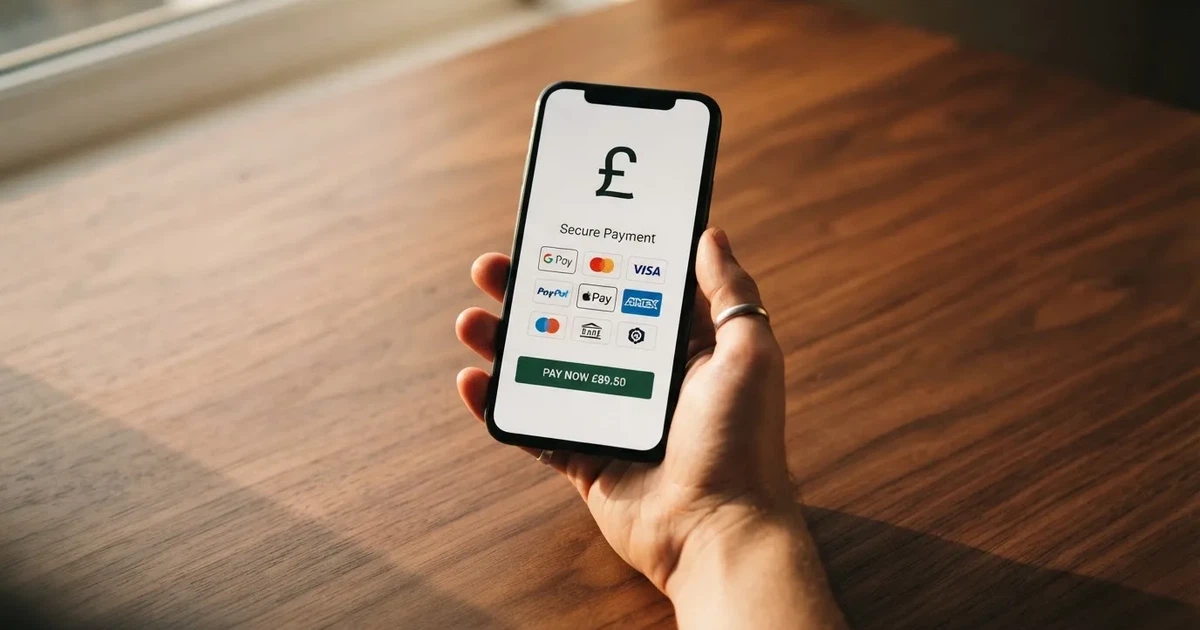
A payment method is the first decision a player makes at any UK online casino, and it is the one that follows every deposit, every spin and every withdrawal after it. Choose the wrong rail and the small print reads differently — what was meant to be a quick top-up can become a held payout, a rejected source-of-funds check, or a route the operator cannot legally use at all. This page walks through the methods a Gambling Commission licensee can offer, which one fits which kind of player, and what each one costs the person paying.
Data current as of 23 September 2026 and verified against the Gambling Commission’s public register.
Table of Contents
- The Shape of the UK Casino Payments Market
- What the Gambling Commission Actually Requires
- What “Safe” Actually Means for a Payment Method
- How Withdrawals Actually Settle at a UK-Licensed Casino
- The Wagering Band: How Much the Bonus Actually Costs
- The Ten Featured UK Casino Brands
- Choosing a Method That Fits the Player
- Tax, Offshore and What the Player Risks
- A Note on the Limits That Do and Do Not Apply
- Where the Method Choice Ends
- Frequently Asked Questions
The Shape of the UK Casino Payments Market
The UK online casino market is unusually orderly, because every site that takes a customer in Great Britain must hold a Gambling Commission licence, wherever the company itself is based. On 18 September 2026 the Commission’s public register of gambling businesses listed 139 businesses holding an active remote casino operating licence. The same register carried 1,065 active domain entries and a further 361 entries marked as white-label sites — domains that trade under another company’s licence rather than running their own.
That register is the test of whether a brand is legitimate. Any brand a reader is comparing on this page will appear in it, against the account number of the licence holder that runs it. A licence number on the register takes the form account-R-number-suffix: the leading six digits repeat the licence holder’s account number, the “R” marks a remote (online) licence, and the suffix counts every additional licence that account has held. The shape of those numbers is the shape of the regulated market — small, named, and tracked.

What the licence does not do is narrow the menu of payment methods. A UK-licensed casino can offer debit cards, bank transfers, e-wallets and pay-by-mobile options freely, but it must block credit cards — including credit cards routed through e-wallets — for any gambling transaction. That ban has been in force since 14 April 2020 and is the single most important fact about the choice a player faces.
What the Gambling Commission Actually Requires
A Gambling Commission licence obliges the operator to verify a customer’s name, address and date of birth before the first deposit is accepted or any real-money play is allowed. That requirement took effect on 7 May 2019 and applies no matter which payment method the player chooses. The method only affects how the verification feels — a debit card deposit looks like a card transaction; a bank transfer carries an account name the operator can match against the player’s; an e-wallet deposit sits behind a layer the operator may have to lift before the first withdrawal.

Two further obligations follow from holding the licence. GAMSTOP, the national online self-exclusion scheme, is a condition of every online licence; a player who has self-excluded cannot deposit through any method the operator offers, and that exclusion runs for six months, one year or five years without early cancellation. From 28 February 2025 a lighter-touch financial vulnerability check runs once net deposits across a rolling 30-day window cross £150, using public data only; further checks were announced but have not come into force at the time of writing.
The Commission also publishes a list of safer-gambling requirements that bear directly on the payment choice. From 31 October 2025 operators must prompt the customer to set a financial limit before accepting a first deposit. There is no Commission-set deposit ceiling — what gets capped is the wagering requirement on any bonus, which has been held at 10x since 19 December 2025, and the stake per spin on slots, which is £5 for players aged 25 and over and £2 for those aged 18 to 24. A slot spin may not run faster than 2.5 seconds, auto-play is banned, and what the industry used to call “losses disguised as wins” — celebratory sounds on a net loss — are no longer permitted.
What the player gets in return is a route to complain if something goes wrong. Licensed operators submit to an approved alternative dispute resolution (ADR) provider and to the Commission’s own complaints process. Unlicensed sites offer neither. The Commission can disrupt illegal sites — cease-and-desist notices, search-engine delisting, payment and hosting referrals — but it cannot order an ISP to block them, and what the player loses by going offshore is exactly that route back.
What “Safe” Actually Means for a Payment Method
The safest method, in the narrow sense, is the one that does the least damage when something goes wrong. For most players that means a method with a low transaction ceiling, an operator that does not store the underlying card number, and a refund route the player’s bank will recognise.
A prepaid voucher such as Paysafecard has a natural ceiling — the value of the voucher itself, paid for in cash at a corner shop — and the operator never sees a bank account or a card number. An e-wallet adds a layer of tokenisation, replacing the actual account number with a device- or merchant-specific token for each transaction, which is the same architecture Apple Pay uses in store. A debit card on a Visa or Mastercard rail is reversible through the card issuer’s chargeback process, which is the route that catches most disputes.
What none of those layers replace is the operator’s own duty. A licensed casino cannot legally pay out to a credit card, and an unlicensed casino can refuse to pay out to anything. The safety of the method is downstream of the safety of the site, which is downstream of the licence.
Prepaid Vouchers and Pay-by-Mobile
Paysafecard is the established UK option here. A player buys a 16-digit PIN at a newsagent or petrol station, enters it at the deposit screen, and the operator receives the value of the voucher without ever seeing a bank account. The ceiling is the size of the voucher; the floor is that withdrawals are not possible back to a Paysafecard — the operator pays out to a bank account or, in some cases, an e-wallet. That asymmetry is the trade: in by voucher, out by something else.
Pay-by-mobile services — typically billed to the player’s mobile phone account — work the same way for deposits. They have a low ceiling by design (often £30 per day), no withdrawal path, and they bind the operator to the mobile network’s age-verification and KYC rules as well as the Commission’s. For a player who wants to keep the bank statement clean, they are useful. For anyone trying to move a serious balance in or out, they are the wrong tool.
E-Wallets: Apple Pay and AstroPay
E-wallets sit between the player’s bank and the casino. The wallet holds the funding source — a debit card, a bank account, sometimes a prepaid balance — and the casino sees only the wallet. Apple Pay uses tokenisation at the device level, generating a device-specific number and a dynamic security code for each transaction; it launched on 20 October 2014 and began supporting UK-issued payment cards on 14 July 2015. In a UK casino context it works as a deposit method at any operator that has integrated Apple Pay on its cashier page, with withdrawal support dependent on the operator’s own configuration. Authentication is by double-click of the side button on Face ID iPhones or the Home button on Touch ID models.
AstroPay, headquartered in Uruguay and founded in 2009, operates as a global digital wallet offering online payments, virtual and physical debit cards, and peer-to-peer transfers. Its UK entity, Larstal Limited, is an electronic money institution authorised by the Financial Conduct Authority under the Electronic Money Regulations 2011 — a separate regulatory permission from the casino licence itself. AstroPay spun off its payment-processing business, dLocal, as a separate company in 2016, and it runs further licensed entities on the Isle of Man, in Brazil and in Denmark.
E-wallets have one practical advantage at the cashier: they compress the verification step. Because the wallet has already verified the underlying funding source, the casino can accept the deposit before it has run its own full KYC, with the full check still required before the first withdrawal. That makes e-wallets the fastest deposit method, not the fastest withdrawal.
Debit Cards and Bank Transfers
Debit cards on the Visa and Mastercard rails remain the default. They are the method every UK-licensed casino accepts, the method that maps to a chargeback route if something goes wrong, and the method the player most often uses day-to-day. They are also the method the Gambling Commission’s evidence base used to justify the credit-card ban: in 2018 the Commission estimated that around 800,000 UK consumers used credit cards to gamble, and 22% of online gamblers who used credit cards to gamble were classed as problem gamblers.
Bank transfers within the UK typically move through the Faster Payments Service, launched in 2008 and operated by Pay.UK. Faster Payments runs 24 hours a day, seven days a week; most payments arrive instantly or within a couple of minutes, though transfers can occasionally take up to two hours. The scheme sets a £1,000,000 per-transaction limit, although individual banks can and do impose lower limits on their customers. The Bank of England oversees the system’s safety and stability and provides final settlement, but it is not itself a participant in the scheme.
For withdrawals, Faster Payments is the rail most UK-licensed casinos use to send winnings back to the player’s bank account, and that is why an instant or near-instant payout is now routine at the better-run sites — once the operator’s internal checks are done, the money moves at the speed of the scheme. The method the player used to deposit does not, in itself, slow the payout; the operator’s processing queue does.
How Withdrawals Actually Settle at a UK-Licensed Casino
A withdrawal is two operations, not one. The operator has to approve the payout, which includes passing the customer’s ID and source-of-funds checks and any open bonus wagering; then it has to send the money, which means choosing a rail. The first step is the slow one.
A UK-licensed casino cannot pay a credit card — the same ban that applies to deposits applies to withdrawals — but it can pay any other method the player used to deposit, and it will normally try to send the winnings back the same way they came in. That is a fraud-prevention convention, not a Commission rule; the Commission requires the operator to verify the destination matches a payment method in the player’s name, but it does not specify which method must be used. If the player used a Paysafecard or a pay-by-mobile deposit, the operator has no card to send winnings back to, and the payout lands in a bank account or, in some cases, an e-wallet.
The Commission does not set a maximum withdrawal time. What it does enforce is the operator’s own published timeframe, and what the player should look for is whether the operator commits to processing withdrawals within hours rather than days. The fastest UK-licensed casinos process payouts in a few hours once verification is complete, with the money typically arriving on a Faster Payments rail; the slowest can take several working days, and that delay is usually in the operator’s queue rather than the rail.
The Wagering Band: How Much the Bonus Actually Costs
The Commission’s wagering cap, in force since 19 December 2025, sets a 10x ceiling on the wagering requirement attached to any casino bonus. That rule is the line the rest of this page reads against.
A 10x wagering requirement means that, to clear the bonus, the player has to wager ten times the bonus amount in qualifying bets before any of the bonus balance converts to withdrawable cash. For a £100 bonus, that is £1,000 of qualifying play; for a £200 bonus, it is £2,000. The Commission did not set the underlying multiplier that operators have to use — it set the maximum. Most UK-licensed sites sit at or below the 10x ceiling, with a meaningful share of offers now at lower multiples.
The cost of clearing that bonus depends on the games the player chooses. Slots contribute 100% to wagering at almost every UK-licensed site, with a few exceptions for low-percentage games, and they clear the requirement quickly. Table games contribute far less — typically 10% or less — and live dealer games sometimes do not contribute at all. The trade is between clearing speed and return to player: a £1,000 turnover on a 96% slot costs about £40 in expected loss, while the same turnover on a 99% blackjack game costs about £10 — but the blackjack takes far longer to clear.
What the wagering cap does not change is the offer’s design. A bonus is still a marketing tool dressed as a gift; the requirement is what the operator is actually paying for. With the 10x cap, the cost is bounded: a £100 bonus at 10x wagering, cleared on a 96% slot, costs around £40 in expected play; a £200 bonus at the same terms costs around £80. Below the cap, the math holds; above it, the offer is illegal. Players should treat any bonus with a wagering multiplier above 10x as a red flag for an unlicensed site.
The Ten Featured UK Casino Brands
The ten brands below are taken from the Gambling Commission’s public register, each against the account number of the licence holder that runs it. They appear here in the order set by that register, not as a ranking. Where one licence holder runs several brands, those brands share the same operator behind the scenes — Gamesys Operations Limited, for example, runs both Virgin Games and Jackpotjoy under the same licence.
| Brand | Licence holder | GB remote casino licence | Domain status | Payment-method coverage |
|---|---|---|---|---|
| Virgin Games | Gamesys Operations Limited | 038905-R-319430-022 | White-label domain | — |
| Betfred | Petfre (Gibraltar) Limited | 039544-R-319290-010 | Active | — |
| Betfair | PPB Games Limited | 039411-R-319335-010 | Active | — |
| Sky Vegas | Bonne Terre Gaming Limited | 065519-R-339675-002 | Active | — |
| Gala Bingo | LC International Limited | 054743-R-330863-014 | Active | — |
| 32Red | Platinum Gaming Limited | 045322-R-324275-019 | Active | — |
| Casumo | Recro Limited | 061549-R-336718-002 | Active | — |
| Midnite | Dribble Media Limited | 042647-R-321653-022 | Active | — |
| PokerStars | Stars Interactive Limited | 039108-R-319334-026 | Active | — |
| Jackpotjoy | Gamesys Operations Limited | 038905-R-319430-022 | Active | — |
Virgin Games
Virgin Games runs as a white-label domain of Gamesys Operations Limited, the same operator that runs Jackpotjoy further down this list. Its domain entry on the Commission’s register is marked as a white-label site — a brand that trades under another company’s licence rather than holding its own. The games catalogue and cashier configuration follow Gamesys’s product, which means the payment-method coverage mirrors what the parent operator offers: debit cards, bank transfer, the main e-wallets, and Apple Pay at the cashier.
For a player comparing Virgin Games to the others on this page, the practical question is whether the Gamesys cashier covers the method they want to use. Most will; the small-print question is withdrawal routing, because the operator pays out to a method in the player’s name, not necessarily the one the player deposited with.
Betfred
Betfred sits under Petfre (Gibraltar) Limited, with Betfred listed as an active domain on the Commission’s register. Petfre’s licence account is 39544, and the remote casino licence number is 039544-R-319290-010. As one of the longest-established names in UK high-street betting, Betfred’s online cashier is built around debit cards and Faster Payments bank transfer, with the e-wallet suite added on top.
The trade at Betfred is between the breadth of its sportsbook and the depth of its payment-method coverage. A player who wants to use Apple Pay or Google Pay at the cashier will find them, but the more interesting question is the operator’s withdrawal queue — Betfred processes payouts through Faster Payments once verification is complete, which means the rail is fast once the operator’s internal hold is cleared.
Betfair
Betfair, under PPB Games Limited, holds the remote casino licence 039411-R-319335-010. The exchange heritage shows in the cashier: Betfair was built around bank transfer and debit card rails, with a strong track record on Faster Payments withdrawals. The poker and sportsbook side of the business feeds into the casino, and the payment-method set reflects that broad footprint.
For a player who wants a single wallet across casino, poker and sports, Betfair is one of the cleanest options on the register. The cashier supports the standard UK-licensed methods, and the operator’s withdrawal processing times are competitive once verification is done.
Sky Vegas
Sky Vegas trades under Bonne Terre Gaming Limited, with Sky Vegas listed as an active domain on the Commission’s register. Bonne Terre’s licence account is 65519 — a higher account number than the older operators on this list, reflecting Sky’s later entry into the casino market. Sky Vegas runs on a Playtech-backed platform, and the cashier offers the standard UK-licensed debit-card, bank-transfer and e-wallet set.
The Sky Vegas angle is the broadcast tie-in. For payments, what that means in practice is a lean cashier with the mainstream methods and a withdrawal process that runs through Faster Payments once verification is complete.
Gala Bingo
Gala Bingo sits under LC International Limited, which also runs Ladbrokes and Coral under the same corporate umbrella. The remote casino licence is 054743-R-330863-014, and Gala Bingo is listed as an active domain. The shared platform means the payment-method coverage at Gala Bingo is the LC International standard — debit cards, bank transfer, e-wallets, and Apple Pay at the cashier.
For a player choosing between Gala Bingo and the other LC International brands, the difference is the product, not the cashier. The payment-method set is the same; what changes is the games catalogue and the bonus structure.
32Red
32Red, under Platinum Gaming Limited, holds the remote casino licence 045322-R-324275-019. 32red is listed as an active domain, and the brand has run on a Microgaming-backed platform for most of its life. The cashier offers the standard UK-licensed methods, with a focus on debit cards and Faster Payments withdrawals.
32Red’s reputation is built on a relatively concentrated product — a smaller games catalogue than the multi-licensee platforms, with a heavier weighting toward roulette and slots. For a player who values a tidy cashier over a sprawling one, 32Red is the kind of brand that fits.
Casumo
Casumo, under Recro Limited, holds the remote casino licence 061549-R-336718-002. Casumo is listed as an active domain. The brand has built its reputation on a gamified product — missions, trophies, an adventure-style progression layer — and the cashier supports the standard UK-licensed methods, with strong coverage of e-wallets and pay-by-mobile options.
For a player comparing Casumo to the longer-established brands on this list, the practical difference is the operator’s product. The payment-method set is mainstream; the wrapper is not.
Midnite
Midnite, under Dribble Media Limited, holds the remote casino licence 042647-R-321653-022. Midnite is listed as an active domain. Midnite is one of the newer brands on the Commission’s register, and the cashier is built around a modern product stack — debit cards, Faster Payments bank transfer, Apple Pay at the cashier, and a smaller set of e-wallets.
The interesting question at Midnite is withdrawal processing. As a newer operator, Midnite has a less established track record on Faster Payments payouts, and the player should look at the operator’s published withdrawal timeframe before committing.
PokerStars
PokerStars, under Stars Interactive Limited, holds the remote casino licence 039108-R-319334-026. PokerStars is listed as an active domain — the .uk domain reflecting the brand’s deliberate separation of its UK business from its older international operation. The cashier covers the standard UK-licensed methods, with strong support for e-wallets and a focus on Faster Payments withdrawals.
For a player coming from the international PokerStars client, the .uk domain matters: it is the domain the Commission regulates, and it is the only PokerStars domain on which UK players should deposit.
Jackpotjoy
Jackpotjoy sits under Gamesys Operations Limited — the same licence holder as Virgin Games, with the same remote casino licence number, 038905-R-319430-022. Jackpotjoy is listed as an active domain, in contrast to Virgin Games’ white-label status. The games catalogue and the cashier are the Gamesys standard: debit cards, bank transfer, the main e-wallets, and Apple Pay at the cashier.
For a player comparing Jackpotjoy and Virgin Games, the practical answer is that they share an operator and a cashier. The brand is the differentiator, not the payment-method set.
Choosing a Method That Fits the Player
A low-stakes player who tops up £20 at a time and plays casually has a different problem from a high-stakes player moving £500 sessions. The low-stakes player wants a method with a low transaction ceiling that they can verify once and forget — a debit card is fine, an e-wallet is overkill, a pay-by-mobile option is the cleanest fit if the player does not want a withdrawal route back to the same source. The high-stakes player wants a method with no ceiling and a fast withdrawal rail, which means a debit card or Faster Payments bank transfer, with the operator’s withdrawal queue as the binding constraint.
A player who values privacy should start with a Paysafecard or pay-by-mobile deposit, accepting that withdrawals will go to a bank account or e-wallet by default. A player who values chargeback protection should stay on a debit card rail — that is the only method with a meaningful bank-led dispute route. A player who wants the fastest cashier experience should look for an operator that supports Apple Pay at deposit and Faster Payments at withdrawal, and that publishes a withdrawal timeframe in hours rather than days.
The trade at the cashier is rarely between methods; it is between operators. The method is what the player chooses; the operator’s processing queue is what determines when the money actually moves. A player who deposits by debit card at a slow operator will wait longer for a withdrawal than a player who deposits by e-wallet at a fast one, and that is the comparison the rest of this page is built around.
Tax, Offshore and What the Player Risks
UK players pay no tax on gambling winnings, regardless of the payment method or the operator. Operators pay Remote Gaming Duty, which was raised from 21% to 40% from 1 April 2026 — a model only, and a player should check with HMRC for the live rate. None of that touches the player.
What does touch the player is the choice of operator. Providing gambling to people in Great Britain without a Commission licence is an offence under section 33 of the Gambling Act 2005. The Commission disrupts illegal sites — cease-and-desist notices, search-engine delisting, payment and hosting referrals — but it has no power to order an ISP to block them. No penalty is aimed at the player; what the player loses on an unlicensed site is protection — no GAMSTOP, no Commission complaints route, no approved ADR. A bonus above the 10x wagering cap is an unlicensed offer, because the cap does not apply to a site outside the Commission’s reach.
A Note on the Limits That Do and Do Not Apply
There is no Commission-set deposit ceiling. Operators must prompt the customer to set a financial limit before the first deposit, from 31 October 2025, but the player sets the limit. The financial vulnerability check at £150 net deposits in a rolling 30-day window is a lighter touch than the wider financial risk assessments that have been announced but not yet brought into force.
What is set is the stake per spin on slots: £5 for players aged 25 and over from 9 April 2025, and £2 for players aged 18 to 24 from 21 May 2025. There is no Commission-set loss ceiling. A slot spin may not be faster than 2.5 seconds, auto-play is banned, and losses disguised as wins are not permitted. Each of those rules applies to operators licensed by the Commission; an offshore site runs on its own house rules, and the player takes the difference as risk.
Where the Method Choice Ends
The method a player chooses at the cashier is the method the rest of the session runs through. A debit card deposit becomes a Faster Payments withdrawal if the operator supports it. An e-wallet deposit becomes an e-wallet withdrawal once the operator’s verification is done. A Paysafecard or pay-by-mobile deposit has no withdrawal route at all — the winnings land somewhere else by default.
For most UK players the right answer is a debit card or Faster Payments bank transfer, with an e-wallet as a faster deposit option if the operator supports it. The exotic methods — prepaid vouchers, pay-by-mobile, crypto on an unlicensed site — are useful in narrow circumstances and expensive in others, and the trade at each one is the same: privacy and ceiling control at the deposit, a different rail at the withdrawal, and an operator-led verification queue that runs at the operator’s pace rather than the player’s.
What the page has not done is recommend an operator. The Commission register is the test of whether a brand is licensed; what the player does with that licence is a personal call about game selection, bonus design and withdrawal speed, and those are questions the comparison above is built to answer rather than decide.
Frequently Asked Questions
Are credit cards still allowed for UK online casino deposits?
No. The Gambling Commission banned credit cards for all UK gambling products from 14 April 2020, including credit cards routed through e-wallets. Debit cards and bank transfers are unaffected, and any UK-licensed casino will block a credit-card deposit at the cashier.
Which casino payment methods are generally considered safest?
The safest methods are those with a low transaction ceiling, an operator that does not store the underlying card number, and a refund route the player’s bank recognises. A Paysafecard voucher or a pay-by-mobile deposit has a natural ceiling; an e-wallet with tokenisation adds a layer between the bank and the casino; a debit card carries the chargeback route. None of those layers replace the operator’s own licence.
Does Paysafecard work as a deposit method at UK-licensed casinos?
Yes, at operators that have integrated it. Paysafecard works for deposits only — a 16-digit PIN bought at a newsagent or petrol station — and the operator cannot pay winnings back to the same voucher. Withdrawals from a Paysafecard-funded balance land in a bank account or, in some cases, an e-wallet.
Do all casino payment methods settle withdrawals at the same speed?
No, and the variation is in the operator’s queue, not the rail. Once a UK-licensed casino has approved a withdrawal and completed its verification, the money typically moves through Faster Payments and arrives within minutes. The slow step is the operator’s processing time, which can range from a few hours to several working days at the slowest sites.
Is ID verification required before a first deposit regardless of payment method?
Yes. A Gambling Commission licensee must verify the customer’s name, address and date of birth before accepting a first deposit or any real-money play. That requirement took effect on 7 May 2019 and applies whether the player deposits by debit card, e-wallet, bank transfer or pay-by-mobile.
Published by the livetablesuk team.