
Online Casino with 300% Bonus in the UK: What the Multiplier Actually Buys You
A 300% match bonus quadruples the cash a player puts in, which is the kind of headline that does a lot of work before anyone asks how it leaves. In the UK, every offer of this shape now sits inside the Gambling Commission’s rules: since 19 December 2025, wagering requirements on bonuses are capped at 10x, and the GAMSTOP self-exclusion check runs before any promotion can be claimed. This page walks through what a 300% bonus actually pays out, what the 10x cap means for the size of the bonus that can be offered, and which ten licensed operators appear on the Commission’s register.
Current as of 23 November 2026 against the Gambling Commission’s public register of gambling businesses.
Table of Contents
- Key Regulatory Limits for Bonuses
- Legality and Regulation: Where the 300% Offer Has to Fit
- Responsible Gaming: The Cost That Goes Unstated
- Payments and Payout Speed: Getting the Money In and Out
- Bonuses and Free Spins: What the 300% Match Actually Pays
- The Cost of a 300% Bonus: What the Wagering Cap Produces
- The Ten Licensed Operators: A Landscape View
- BetVictor: Established Brand, Standard Structure
- Betfair: Exchange Heritage, Casino Vertical
- kwiff: Newer Licence, Different Branding
- Ladbrokes: High-Street Brand, Multi-Brand Licence
- Virgin Games: White-Label Structure Under Gamesys
- Betway: Single-Brand Licence, International Parentage
- Jackpotjoy: Active Domain, Shared Licence with Virgin Games
- Betfred: High-Street Heritage, Gibraltar Operating Company
- Sky Vegas: Bonne Terre Gaming, Broadcast Brand
- 888casino: Long-Established Brand, 888 UK Limited
- The 300% Bonus and the 10x Cap: How Heavy the Offer Really Is
- What a Player Should Check Before Claiming
- Frequently Asked Questions
Key Regulatory Limits for Bonuses
| Limit Type | Application | Regulatory Basis |
|---|---|---|
| Wagering Requirement | 10x bonus amount | 19 Dec 2025 rule |
| Max Stake (25+) | £5 per cycle | 9 Apr 2025 rule |
| Max Stake (18-24) | £2 per cycle | 21 May 2025 rule |
| Vulnerability Check | £150 net/30 days | 28 Feb 2025 rule |
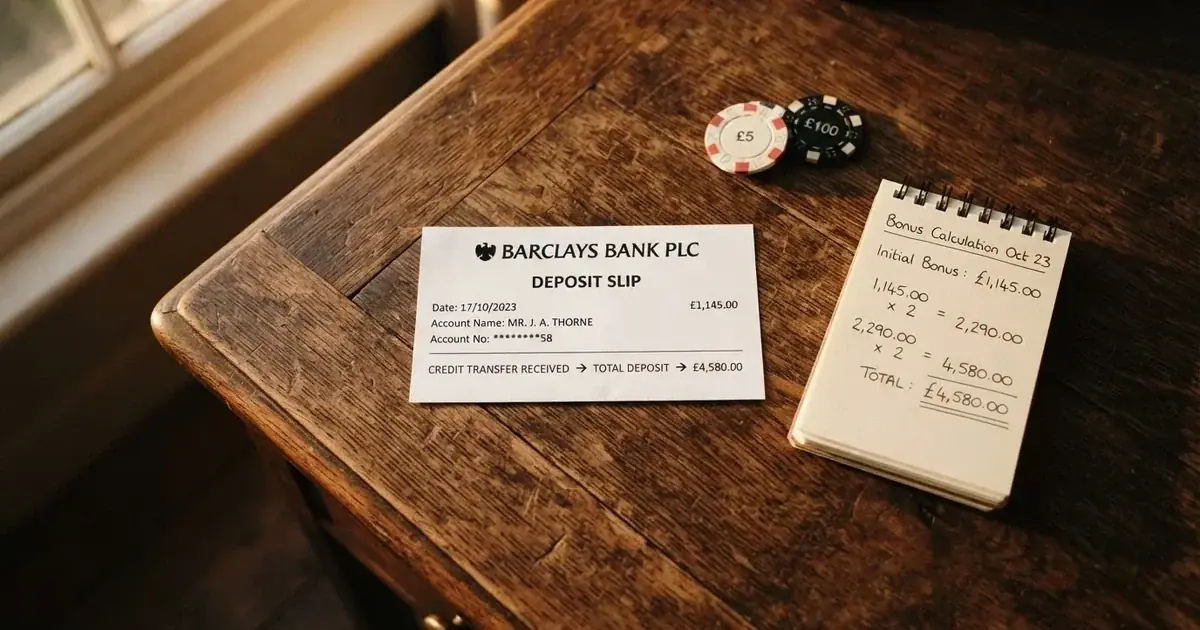
A 300% bonus is a simple multiplier on a deposit. A player depositing £20 with a 300% match receives £60 in bonus funds on top, leaving a playable balance of £80. A £100 deposit produces £300 in bonus money, making £400 playable. The mechanism does not change with the deposit size; what changes is the headline number the marketing team picks.
The phrase “match bonus” matters. The bonus is credited as a separate balance, not added to the deposit. It comes with conditions: a wagering requirement that must be cleared before any of it can be withdrawn, time limits, and restrictions on which games contribute. None of these is optional, and the cost of clearing the bonus sits squarely on the player.
This is not a standalone product. Every brand reviewed below carries the same fundamental structure: deposit a qualifying amount, receive a percentage match as bonus funds, meet the wagering requirement within the stated period. The differences across operators lie in caps, eligible games, payment methods and the speed of withdrawals after the bonus clears, and those are the differences this page tracks.
The Commission’s role in this is to draw a line around what the offer can look like. The 10x wagering cap, introduced on 19 December 2025, limits how steep the requirements can be; the GAMSTOP check, mandatory since 31 March 2020, means anyone who has self-excluded cannot claim the offer at all. The promotional headline is the operator’s. The shape of the offer is not.
Legality and Regulation: Where the 300% Offer Has to Fit
The Gambling Commission regulates online casino play for Great Britain, covering England, Scotland and Wales under the Gambling Act 2005. Since the Gambling (Licensing and Advertising) Act 2014, any operator taking customers in Great Britain needs a Commission licence, regardless of where that operator is based. A Curaçao, Malta or Gibraltar licence is not a substitute. The public register of gambling businesses is the test: if the brand is on it, the operator holds a current licence. If it is not, the operator is offshore and unprotected by Commission rules.

Minimum age is 18, and identity, address and date of birth are verified before the first deposit or any play, a requirement in force since 7 May 2019. Anonymous play is not available at a licensed site. GAMSTOP, the national self-exclusion scheme, is a mandatory condition of every online licence. Self-exclusion periods run six months, one year or five years and cannot be cancelled early.
Slot stakes are capped. Since 9 April 2025, players aged 25 and over face a £5 maximum stake per game cycle; since 21 May 2025, the cap for 18-24-year-olds is £2 per game cycle. Auto-play has been banned since 31 October 2021, slot spins cannot complete faster than 2.5 seconds, and losses disguised as wins are prohibited.
There is no state-set deposit or loss ceiling. What operators must do, since 31 October 2025, is prompt a customer to set a financial limit before the first deposit. The Commission announced wider financial risk assessments but they are not yet in force. Financial vulnerability checks already run at £150 in net deposits over a rolling 30-day window using public data, in force since 28 February 2025.
Bonuses themselves are shaped by the rules in force from 19 December 2025: wagering requirements are capped at 10x, and mixed-product bonuses, the kind that offer a free bet on sport alongside casino spins, are banned. Credit cards have been banned for gambling since 14 April 2020, including credit cards routed through e-wallets. Debit cards and bank transfers are unaffected.
Providing gambling to people in Great Britain without a licence is an offence under section 33 of the Gambling Act 2005. The Commission disrupts illegal sites, issuing cease-and-desist notices, requesting search-engine delisting, and referring matters to payment processors and hosting providers, but it has no ISP-blocking power. No penalty is aimed at the player. What the player loses on an unlicensed site is the protection: no GAMSTOP, no Commission complaints route, no approved alternative dispute resolution. Players pay no tax on gambling winnings in the UK.
Responsible Gaming: The Cost That Goes Unstated
A 300% bonus quadruples a bankroll, and a quadrupled bankroll is the kind of thing that quietly quadruples spending if the player is not watching. The Commission’s rules treat this as predictable rather than exceptional. The financial limit prompt before the first deposit is the lever: a player sets a ceiling on what they can put in across a day, week or month, and the operator enforces it. A paysafecard-funded bonus still counts toward that ceiling; the payment method does not exempt the deposit from the limit. Setting one before claiming the offer is worth the minute it takes.
GAMSTOP is the heavier tool. A self-exclusion, for six months, one year or five years, blocks the player from every licensed online operator in Great Britain for the period chosen, and cannot be reversed once set. Anyone who has registered with GAMSTOP cannot claim a 300% bonus at any of the ten brands reviewed below; the registration check runs before the offer is shown. The point of GAMSTOP is not to police the small mistake. It is for the player who has decided the next bet is the wrong one.
The Commission’s financial vulnerability check at £150 in net deposits over a rolling 30-day window uses public data only, such as court records and insolvency registers. Wider risk assessments, drawing on broader financial information, have been announced but are not yet in force. The narrow check is a soft intervention. It catches some of the cases the wider check is designed for, but not all of them.
Help exists. GamCare runs the National Gambling Helpline, and GambleAware funds treatment and support across Great Britain. Both are free, both are confidential, and neither requires the player to have stopped gambling before calling. The page carries these because the kind of player who reads about a 300% bonus is exactly the kind who benefits from having the number to hand before they need it.
Payments and Payout Speed: Getting the Money In and Out
A 300% match is a deposit-gated offer, which means the payment method that funds the first deposit is the payment method that has to clear. Most licensed operators accept debit cards, bank transfers and a small set of e-wallets. Credit cards have been banned for gambling in Great Britain since 14 April 2020, including credit cards routed through e-wallets. A player whose only card is a credit card cannot deposit at a licensed site and therefore cannot claim the bonus.
Bank transfers within the UK move through the Faster Payments Service, launched in 2008 and operated by the scheme provider. The service runs 24 hours a day, seven days a week, and most payments arrive instantly or within a couple of minutes, though transfers can occasionally take up to two hours. Faster Payments carries a £1,000,000 per-transaction limit, but individual banks commonly impose lower limits on their customers. The Bank of England oversees the system’s safety and stability and provides final settlement but is not itself a direct participant in Faster Payments.
E-wallets vary. Apple Pay, developed by Apple Inc. and launched on 20 October 2014, began supporting UK-issued cards on 14 July 2015. Apple Pay protects card data through tokenization, replacing the actual card number with a device-specific tokenised Device Primary Account Number and generating a dynamic security code for each transaction, and in-store payments use near-field communication to communicate with contactless terminals. The US Consumer Financial Protection Bureau finalised a rule in November 2024 bringing large nonbank digital wallet operators, including Apple Pay, under bank-like federal oversight, and the European Commission opened an investigation in 2020 into whether Apple abused control of iPhone NFC hardware to block rival payment apps from accessing contactless payments. Apple Pay is not available in all markets; a supported card from a participating issuer is required.
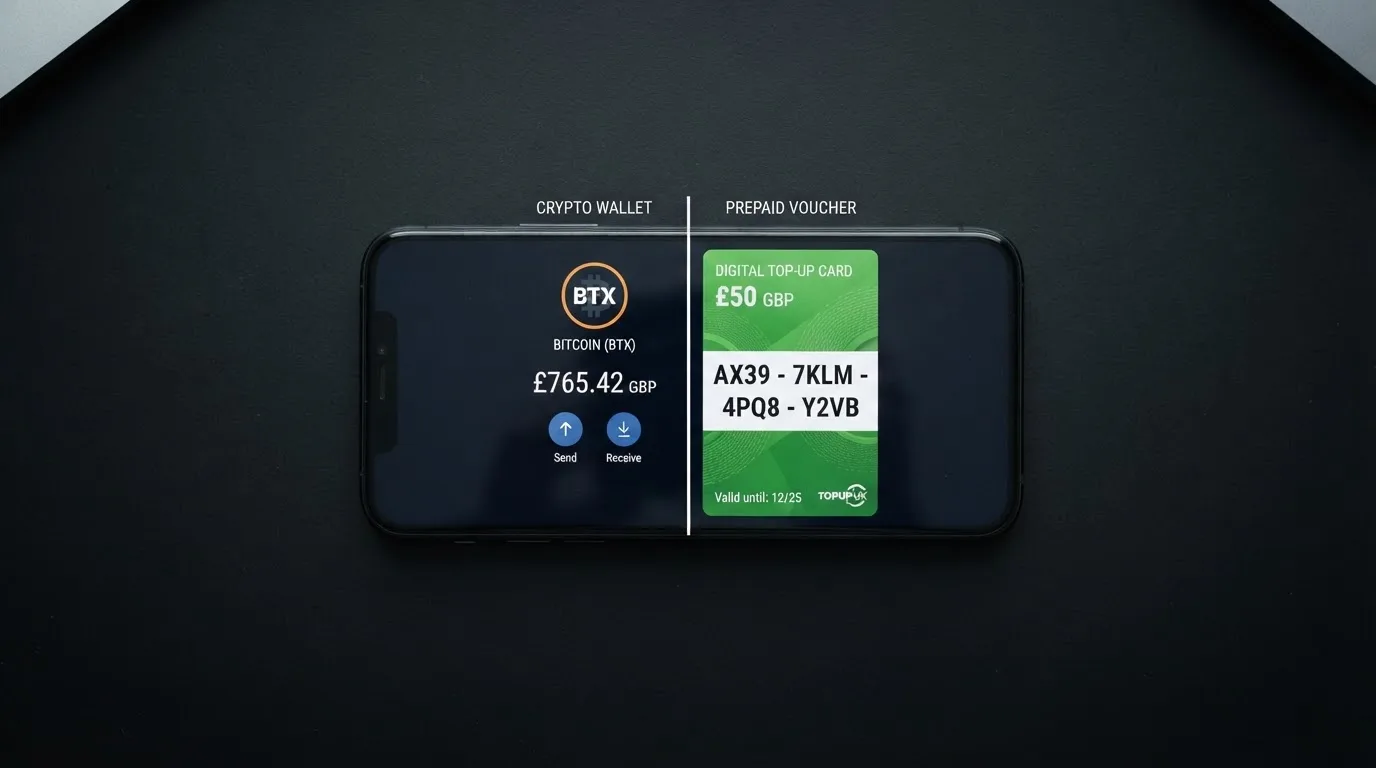
Paysafecard is the prepaid voucher route. A voucher bought with cash at a retail outlet can be redeemed at the cashier without sharing bank details. The 300% bonus can be claimed with paysafecard where the operator accepts it, but the deposit still counts toward the player’s own financial limit set under the Commission’s pre-deposit prompt rule.
AstroPay operates as an alternative. Founded in 2009 and headquartered in Uruguay, AstroPay is a global digital wallet offering online payments, virtual and physical debit cards, and peer-to-peer transfers. Its UK entity, Larstal Limited, is an electronic money institution authorised by the Financial Conduct Authority under the Electronic Money Regulations 2011; its Isle of Man entity, AstroPay Global (IOM) Limited, is licensed by the Isle of Man Financial Services Authority for money transmission; its Brazilian entity is authorised by the Brazilian Central Bank; and its Danish entity is authorised by the Danish Financial Supervisory Authority. AstroPay spun off its payment-processing business, dLocal, as a separate company in 2016. The wallet serves users across Argentina, Australia, Brazil, Canada, Colombia, Denmark, Spain, the United Kingdom, the United States and Uruguay.
Withdrawal speed is the metric that matters once the wagering requirement is cleared. E-wallets and Faster Payments tend to clear within hours at a licensed operator; debit card withdrawals typically take one to three business days. The minimum withdrawal, the maximum daily or monthly cashout, and any fee on withdrawals are operator-specific and worth checking before the deposit is made. None of this changes with the size of the bonus. What the bonus changes is how long the player has to wait before they are eligible to withdraw anything at all.
Bonuses and Free Spins: What the 300% Match Actually Pays
The shape of a 300% offer depends on the cap and the eligible games. A small-cap bonus of £60 on a £20 deposit quadruples a player’s funds for a constrained session; a large-cap offer of £3,000 on a £1,000 deposit quadruples a much bigger stack but locks the player into a far heavier wagering requirement. The Commission’s 10x wagering cap, in force since 19 December 2025, limits how large that requirement can be. A £300 bonus on a £100 deposit means the player must turn over £3,000 before any of the bonus balance becomes withdrawable; a £3,000 bonus on a £1,000 deposit means £30,000 of turnover.
Game contribution is where the cap meets reality. Slots almost always contribute 100% toward wagering requirements. Table games, live casino, and most video poker variants contribute far less, often 10% or zero. A player who tries to clear a £3,000 wagering requirement on a 10%-contributing table game must generate £30,000 in qualifying bets. The bonus terms say what counts. Reading them is not optional.
Free spins bundled with a 300% match are common. The pattern is a deposit match plus a fixed number of spins on a named slot, with any winnings paid as bonus funds subject to the same wagering requirement as the cash match. Mixed-product bonuses, where a sportsbook free bet is bundled with casino spins, are banned under the 19 December 2025 rules. Casino-only bundles remain.
Time limits bind the bonus. A 30-day window is the industry norm at licensed operators. The bonus expires, along with any winnings tied to it, if the wagering requirement is not met within the window. The same terms govern what happens if the player withdraws their deposit before clearing: most operators void the bonus and any associated winnings.
The 10x cap is the single most important number on the page. It limits the size of the offer a licensed operator can credibly make: a 300% match on a £100 deposit at the cap means £3,000 of turnover; the same match on a £1,000 deposit means £30,000. That latter figure is heavy enough that an operator offering it would need to set a tight cap on the bonus amount. The offers actually live on licensed sites tend to sit in the lower band, which is itself a consequence of the rule.
The Cost of a 300% Bonus: What the Wagering Cap Produces
The Commission’s 10x wagering cap, in force since 19 December 2025, sets the ceiling on what any licensed operator can ask a player to turn over. Working through what that means in practice shows where the 300% headline stops mattering.
A bonus of £300 on a £100 deposit carries a £3,000 turnover requirement at the 10x cap. At a typical slot stake of £1 per spin, that works out to 3,000 spins. At the Commission’s 2.5-second minimum spin interval, 3,000 spins take roughly 7,500 seconds, or just over two hours of continuous play. The arithmetic is the same regardless of stake size: lower stakes mean more spins, higher stakes mean fewer, but the total turnover required is fixed by the cap.
A bonus of £60 on a £20 deposit, the smaller-cap version of the same 300% match, carries a £600 turnover requirement. At £1 per spin, that is 600 spins, or roughly 25 minutes of continuous play at the minimum spin interval. The small-cap offer is a brief session; the large-cap offer is a long one.
The expected loss varies with the slot’s return-to-player rate. A 96% RTP slot retains 4% of turnover on average, so a £3,000 turnover requirement costs an expected £120 across the clearing period. A 94% RTP slot costs an expected £180. The number is statistical: it is the average across many spins, not a guaranteed outcome for any individual session. Some players will lose less, some will lose more, and the house edge holds in aggregate.
The cost in time is fixed. The cost in money scales with the slot chosen. A high-RTP slot reduces the expected loss on the bonus; a low-RTP slot increases it. The wagering cap controls the duration. The RTP controls the depth.
For a player with a £20 bankroll, the £60-cap version is a tight session at modest cost. For a player with a £1,000 bankroll chasing the larger cap, the £30,000 turnover requirement is a serious commitment, and the expected loss across that turnover is meaningful whatever the slot. The same headline percentage, applied to two different deposit sizes, produces two very different experiences. The cap is the player’s friend. The bonus size is the player’s choice.
The Ten Licensed Operators: A Landscape View
Every brand below is listed on the Gambling Commission’s public register. The table reads the register’s own columns: the licence holder, the remote casino operating licence number, and the domain status. Subject support is not present on the register and is left as the article-language no-data marker for each brand. The order follows the register’s listing order for the featured set; nothing in the table is a ranking.
| Brand | Licence holder and GB remote casino licence | Domain status | Subject support |
|---|---|---|---|
| BetVictor | BV Gaming Limited — 039576-R-319370-028 | Active | — |
| Betfair | PPB Games Limited — 039411-R-319335-010 | Active | — |
| kwiff | Eaton Gate Gaming Limited — 044448-R-323408-017 | Active | — |
| Ladbrokes | LC International Limited — 054743-R-330863-014 | Active | — |
| Virgin Games | Gamesys Operations Limited — 038905-R-319430-022 | White Label | — |
| Betway | Betway Limited — 039372-R-319367-029 | Active | — |
| Jackpotjoy | Gamesys Operations Limited — 038905-R-319430-022 | Active | — |
| Betfred | Petfre (Gibraltar) Limited — 039544-R-319290-010 | Active | — |
| Sky Vegas | Bonne Terre Gaming Limited — 065519-R-339675-002 | Active | — |
| 888casino | 888 UK Limited — 039028-R-319297-014 | Active | — |
The register held 139 businesses with an active remote casino operating licence on 18 September 2026, and 1,065 active domain entries alongside 361 white-label entries. A white-label site trades under another company’s licence; Virgin Games is the only white-label domain in this set, sitting under Gamesys Operations Limited. Jackpotjoy sits under the same licence but is listed as an active rather than white-label domain. Several brands can share one licensee: Ladbrokes is one of multiple brands under LC International Limited, the same holding structure that covers Coral and Gala Bingo. None of the brands in this table is an independent operator in the sense of holding its own licence.
Subject support, meaning whether the operator currently advertises a 300% match offer, is not present on the Commission’s register and was not confirmed by the inputs for any of the ten brands. The table marks this honestly. A 300% bonus at a licensed UK operator sits inside the 10x wagering cap and the GAMSTOP pre-check; the offer terms are operator-specific and change frequently. The register tells the reader the operator is licensed. It does not tell the reader what the operator is currently promoting.
BetVictor: Established Brand, Standard Structure
BetVictor operates under BV Gaming Limited, holding the active remote casino operating licence 039576-R-319370-028, with BetVictor listed as an active domain on the Commission’s register. The brand is one of the longer-established names in British online gambling. As a 300% bonus vehicle, it sits inside the same regulatory frame as every other operator on the register: 10x wagering cap, GAMSTOP check, no credit card deposits. The Commission’s register confirms the licence; the offer terms are not on the register and are not affirmed here.
Betfair: Exchange Heritage, Casino Vertical
Betfair operates under PPB Games Limited, holding the active remote casino operating licence 039411-R-319335-010, with Betfair listed as an active domain. The brand built its reputation on the betting exchange; the casino vertical sits alongside rather than replaces that core product. The same regulatory constraints apply: 10x wagering cap, pre-deposit financial limit prompt, GAMSTOP enrolment before any promotion can be claimed. Betfair’s history is a long one; its bonus terms are not affirmed here.
kwiff: Newer Licence, Different Branding
kwiff operates under Eaton Gate Gaming Limited, holding the active remote casino operating licence 044448-R-323408-017, with kwiff listed as an active domain. The account number is in the 44,000 range, indicating a more recent licensing than the established operators in the table. The brand’s positioning has leaned on a distinctive “surprise” mechanic in its promotions, though a 300% match is not affirmed here. The Commission’s 10x cap applies to whatever offer kwiff runs.
Ladbrokes: High-Street Brand, Multi-Brand Licence
Ladbrokes operates under LC International Limited, holding the active remote casino operating licence 054743-R-330863-014, with Ladbrokes listed as an active domain. LC International Limited is a multi-brand licensee: Ladbrokes, Coral and Gala Bingo all sit under the same licence. This matters because the 10x wagering cap, the GAMSTOP check and the pre-deposit financial limit prompt are licence-level obligations; they apply to every brand the licensee runs. The same compliance frame covers all three.
Virgin Games: White-Label Structure Under Gamesys
Virgin Games operates as a white-label domain under Gamesys Operations Limited, holding the active remote casino operating licence 038905-R-319430-022. A white-label site trades under another company’s licence rather than holding its own. Virgin Games does not appear as a separate licensee on the register. The compliance obligations, including the 10x cap and GAMSTOP, attach to the licence holder rather than to the brand. Jackpotjoy, the next entry, runs under the same Gamesys licence but as an active rather than white-label domain.
Betway: Single-Brand Licence, International Parentage
Betway operates under Betway Limited, holding the active remote casino operating licence 039372-R-319367-029, with Betway listed as an active domain. Betway is one of the better-known international gambling brands, though the UK entity is a separately licensed operation. The Commission’s rules, including the 10x wagering cap introduced on 19 December 2025, bind Betway Limited as the GB licence holder.
Jackpotjoy: Active Domain, Shared Licence with Virgin Games
Jackpotjoy operates under Gamesys Operations Limited, holding the active remote casino operating licence 038905-R-319430-022, with Jackpotjoy listed as an active domain rather than a white-label. The licence is the same as Virgin Games, but the domain status is different: Jackpotjoy is directly active under Gamesys, while Virgin Games trades as a white-label using that same licence. Both brands face identical regulatory obligations.
Betfred: High-Street Heritage, Gibraltar Operating Company
Betfred operates under Petfre (Gibraltar) Limited, holding the active remote casino operating licence 039544-R-319290-010, with Betfred listed as an active domain. The operating company is Gibraltar-based, but the licence itself is held with the Gambling Commission for Great Britain under the post-2014 regime; the Gambling (Licensing and Advertising) Act 2014 requires any operator taking GB customers to hold a Commission licence regardless of domicile. The 10x cap and the rest of the rule book apply to Petfre as the GB licence holder.
Sky Vegas: Bonne Terre Gaming, Broadcast Brand
Sky Vegas operates under Bonne Terre Gaming Limited, holding the active remote casino operating licence 065519-R-339675-002, with Sky Vegas listed as an active domain. The brand carries the Sky broadcast identity, though the operating entity is Bonne Terre Gaming Limited rather than Sky itself. The Commission’s 10x wagering cap applies; the offer structure is operator-specific and not affirmed here.
888casino: Long-Established Brand, 888 UK Limited
888casino operates under 888 UK Limited, holding the active remote casino operating licence 039028-R-319297-014, with 888casino listed as an active domain. The 888 group is one of the longer-established names in online gambling; the UK entity is 888 UK Limited. As with every other operator on the register, the 10x wagering cap, GAMSTOP pre-check, and pre-deposit financial limit prompt apply. The brand’s own 300% bonus terms are not affirmed here.
The 300% Bonus and the 10x Cap: How Heavy the Offer Really Is
Working through the numbers shows why the Commission’s 19 December 2025 cap reshapes what a 300% match can credibly look like. A 300% match on a £100 deposit, with a £300 bonus, means £3,000 of required turnover under the 10x cap. That is the cost in qualifying bets before any of the bonus becomes withdrawable. A 300% match on a £1,000 deposit, with a £3,000 bonus, means £30,000 of turnover. The percentage is the same. The exposure is ten times heavier.
For a player depositing £100 at a 96% RTP slot, the expected loss across clearing the bonus is roughly £120, an average over many such sessions, not a guaranteed outcome. The same offer at a 94% RTP slot costs an expected £180. The expected loss is the house edge applied to the turnover. The bonus drives the turnover; the slot determines the depth.
For a player depositing £1,000, the same calculation applied to the £3,000 bonus and £30,000 turnover produces an expected loss of £1,200 at 96% RTP, or £1,800 at 94% RTP. These are averages across many sessions. Any single player will see a different number. The expected loss is the long-run cost the player is paying for the chance to clear the bonus.
The 10x cap is the regulator’s answer to offers that previously carried wagering requirements of 30x, 40x or higher. Under the old rules, a £300 bonus could require £9,000 or £12,000 of turnover, and the expected loss on that turnover was correspondingly heavier. The cap halves or thirds the worst-case exposure. It does not eliminate it. A 300% bonus is still a high-multiplier offer that asks a serious commitment from the player, especially at the larger deposit sizes.
The cap is paired with the ban on mixed-product bonuses from the same date. A player who previously saw a sportsbook free bet bundled with casino spins sees only one or the other now. The cross-sell mechanic is closed. The 300% match, where it exists, stands alone.
What a Player Should Check Before Claiming
Five points decide whether a 300% bonus is worth the commitment, and they sit in the bonus terms rather than on the marketing page.
The wagering requirement. The Commission’s 10x cap means no licensed operator can ask for more than 10x the bonus in turnover. Anything below 10x is operator generosity; 10x is the worst case at a GB-licensed site. Any number higher than 10x is either offshore or wrong.
The eligible games. Slots typically contribute 100% toward wagering; table games and live casino often contribute 10% or nothing. A bonus cleared on slots is one commitment; the same bonus cleared on blackjack is another.
The time limit. Most licensed operators allow 30 days to clear the bonus. The window matters; an offer that cannot realistically be cleared in the time given is not an offer the player can use.
The minimum deposit. The deposit that triggers the match, and the cap on the bonus amount. A 300% match up to £300 means a £100 deposit captures the full offer; a 300% match up to £60 means a £20 deposit is enough.
The payment method. Credit cards are banned for GB-licensed gambling. Paysafecard, debit cards, bank transfers and approved e-wallets work. The GAMSTOP check runs before any promotion can be claimed, so anyone registered with GAMSTOP cannot see the offer at all.
Frequently Asked Questions
How does a 300% casino bonus work?
A 300% match bonus adds three times the deposit amount in bonus funds, quadrupling the playable balance. A £20 deposit produces £60 in bonus money for £80 total; a £100 deposit produces £300 for £400 total. The bonus carries a wagering requirement that must be cleared before any winnings tied to it can be withdrawn. At GB-licensed operators, that requirement is capped at 10x the bonus amount under rules in force since 19 December 2025.
What deposit size is usually needed to unlock a 300% match?
It depends on the operator’s cap. A 300% match up to £60 needs only a £20 deposit to capture the full offer; a 300% match up to £300 needs a £100 deposit. Most licensed operators set the cap low enough that a modest deposit triggers the full bonus, partly because the 10x wagering cap limits how heavy the resulting turnover requirement can credibly be.
Can I claim a 300% bonus with paysafecard?
Where the operator accepts paysafecard, yes. Paysafecard is a prepaid voucher bought at retail outlets and redeemed at the cashier without sharing bank details. The deposit still counts toward the player’s own financial limit, set under the Commission’s pre-deposit prompt rule in force since 31 October 2025. Credit cards, including credit cards routed through e-wallets, are banned for GB-licensed gambling.
What wagering requirement applies to a 300% deposit match under current UK rules?
Since 19 December 2025, wagering requirements on bonuses at GB-licensed operators are capped at 10x the bonus amount. A £300 bonus on a £100 deposit means £3,000 of qualifying turnover. Slots contribute 100% toward the requirement at most operators; table games and live casino often contribute less or nothing. The 10x cap is the worst case at a licensed site; anything higher is either offshore or incorrect.
Do crypto deposits qualify for a 300% welcome bonus?
Crypto-funded 300% offers exist in the wider market but are not present on the Commission’s public register for the ten operators reviewed here. A GB-licensed operator cannot accept anonymous play, and crypto deposits at licensed sites are subject to the same identity and source-of-funds verification as any other payment method. A player seeking a crypto-funded 300% bonus is looking outside the GB-licensed set, where the Commission’s protections, including GAMSTOP and the approved ADR route, do not apply.
Is there a time limit to use a 300% bonus?
Yes. Most licensed operators allow 30 days from the date the bonus is credited to clear the wagering requirement. The bonus, along with any winnings tied to it, expires if the requirement is not met within the window. The exact period is operator-specific and appears in the bonus terms, which should be read before the deposit is made. Withdrawal of the deposit before clearing typically voids the bonus.