
The real cost of a UK welcome bonus, and where Highbet sits in the field
A welcome bonus is a marketing line, and a marketing line is not free money. It is a number of pounds the casino will credit on the condition that you turn a stated quantity of that money through its games, at a stated minimum, within a stated window. Every clause in that sentence has a price, and most of that price falls on the player, not the house. The skill in reading one is to see past the headline figure to what you actually have to do — and what you actually stand to lose — before claiming it.
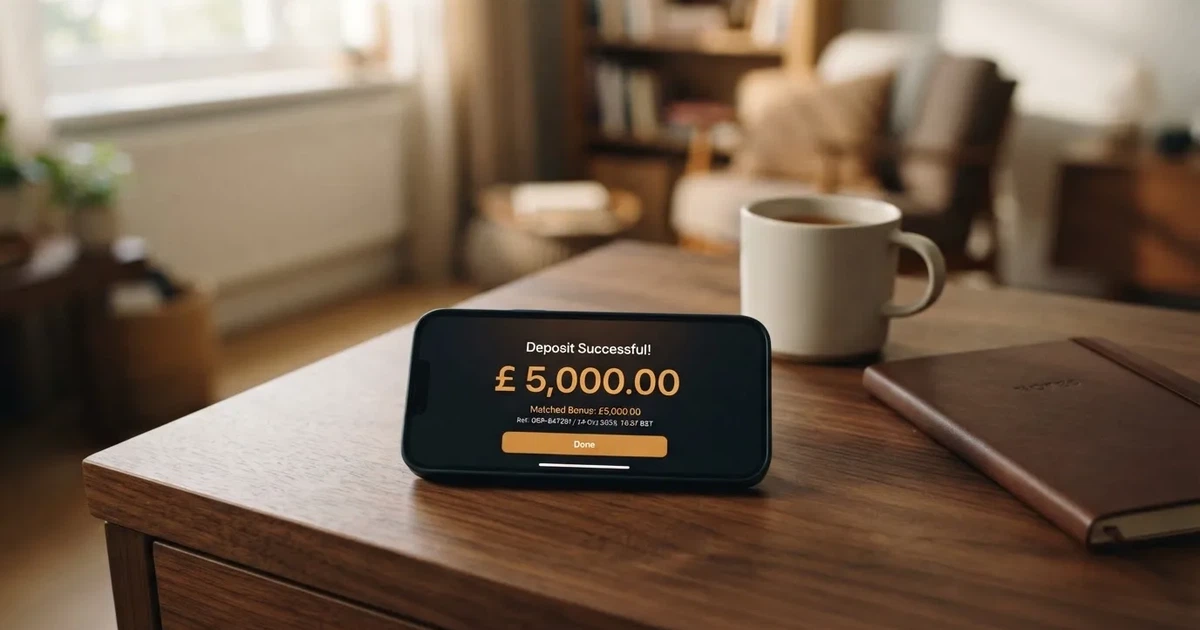
That job has just got harder. From 19 December 2025 the Gambling Commission capped wagering requirements on bonuses at 10x the bonus amount, and banned the mixed-product offers that used to bundle casino spins into a sports bet. From 28 February 2025 a £150 rolling-30-day net deposit figure triggers a financial vulnerability check. From 31 October 2025 a UK-licensed casino has to ask a new customer to set a financial limit before the first deposit. None of this changes what a welcome bonus is; it changes the floor under it. Below that floor the offer does not exist for a British player.
Current as of 23 November 2026 and checked against the Gambling Commission’s public register of gambling businesses.
Table of Contents
- How a welcome bonus actually works
- What the rule book actually says
- What the Commission’s public register looks like on the day
- The 10x cap and what it does to the arithmetic
- The no-deposit question
- Crypto funding and the identity frame
- Payment paths and what each one costs
- What the offer looks like across the ten
- What Highbet looks like inside this frame
- Responsible gambling and the budget question
- How the reader should read this
- Frequently asked questions
How a welcome bonus actually works
A welcome bonus is money the operator agrees to add to a new account, almost always on the condition of a first deposit and almost always with three further conditions attached: how many times the bonus has to be wagered before it can be withdrawn, which games count toward that wagering, and how long the offer stays open before it expires. Some offers add a fourth — a cap on the winnings that can be taken out, or a cap on the size of stake that counts toward the wagering while the bonus is active.
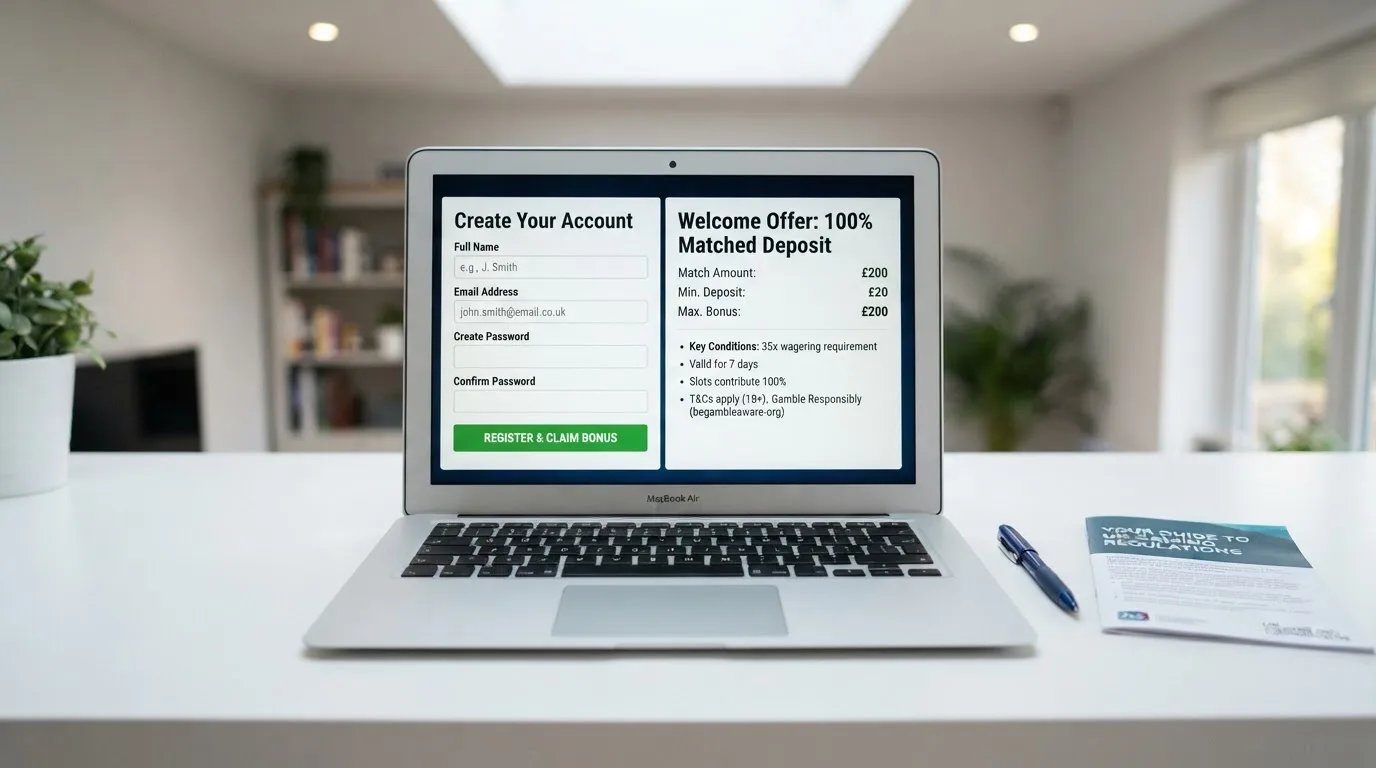
The wagering requirement is the one that costs the player. Wagered £100 at a 10x cap means £1,000 has to pass through eligible games before any bonus-derived balance can be withdrawn, and every pound of that £1,000 is exposed to the house edge of the game being played. The bonus is the gift; the turnover is the price. The two are not the same number, and treating them as if they are is how a welcome offer ends up costing a player more than it ever gave.
The eligible-games list matters because slots, blackjack, roulette and live dealer titles all contribute differently. Slots almost always count 100%. Table games frequently count 10% or nothing, because their house edge is lower and the casino does not want the wagering cleared at a rate it cannot afford. A bonus that reads generously on the headline can read very differently once the contribution table is read.
The expiry window matters because most UK bonuses carry a 7-day or 30-day clock from the moment they are claimed. Unwagered bonus at the end of that window is forfeited, along with any winnings tied to it.
The stake cap matters because a £5-per-spin ceiling on over-25s and a £2-per-spin ceiling on 18-24s (in force at UK-licensed sites since 9 April 2025 and 21 May 2025 respectively) sets the maximum speed at which the wagering can be cleared. A bonus with a 30-day expiry and a 10x turnover that allows only £2 a spin at age 22 has a very different feel from the same bonus at age 30, and that difference is built into the offer rather than tacked onto it.
What the rule book actually says
Three layers govern a UK welcome bonus. The first is the Gambling Act 2005 and the licence it produces. The second is the Licence Conditions and Codes of Practice (LCCP) and the social responsibility code that sits inside it. The third is the Commission’s Remote Technical Standards — the operational layer that turns the codes into something an auditor can check.
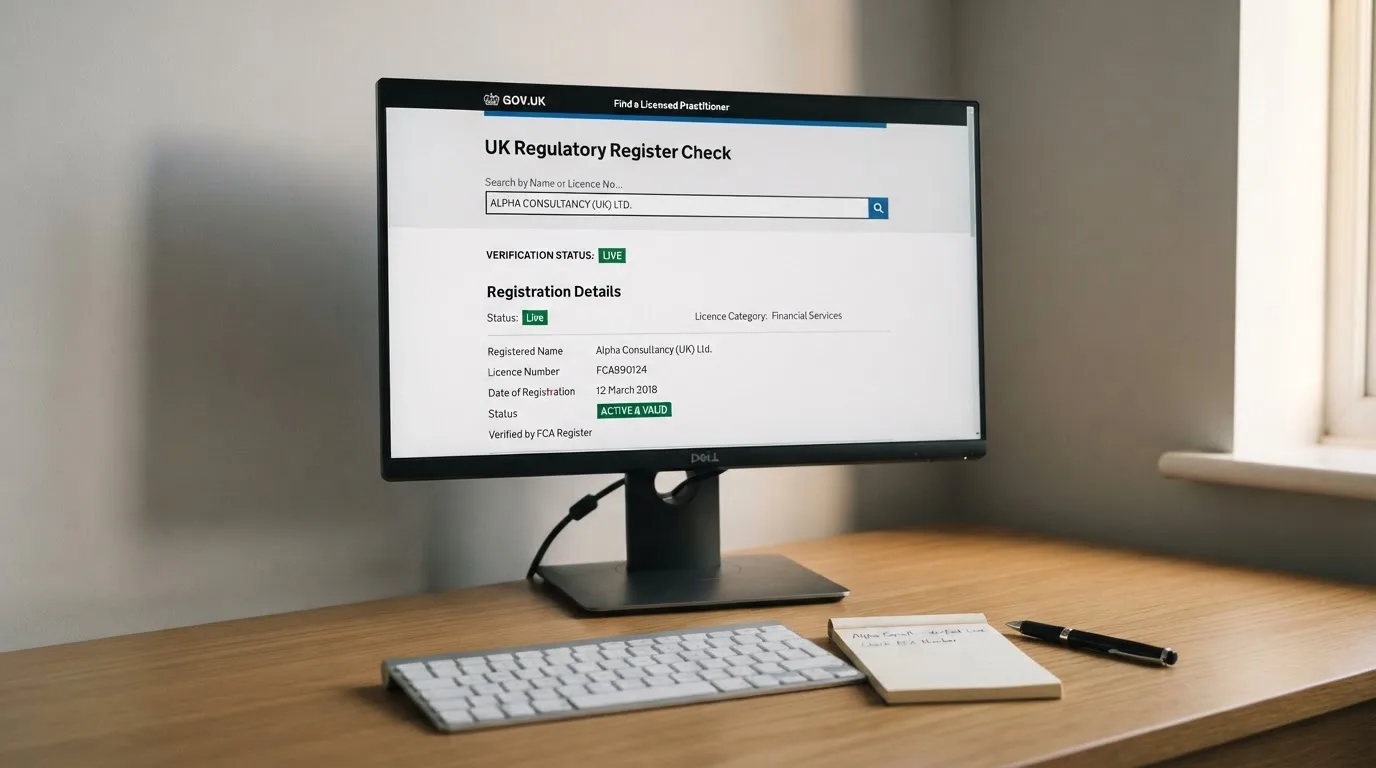
Any operator taking customers in Great Britain needs a Commission licence, wherever it is based. A Curaçao, Maltese or Gibraltar licence is not a substitute. Since 7 May 2019 every new account has its name, address and date of birth verified before the first deposit or any play. Since 31 March 2020 every online licence has carried GAMSTOP participation as a mandatory condition — six months, one year or five years, with no early cancellation. Since 14 April 2020 credit cards have been banned for gambling, including credit cards routed through e-wallets. Since 31 October 2021 slot auto-play has been banned and a spin may not run faster than 2.5 seconds.
The newer layer is the bonus layer. From 19 December 2025 wagering requirements are capped at 10x the bonus amount and mixed-product bonuses are banned. From 9 April 2025 online slots carry a £5 per-game-cycle ceiling for players aged 25 and over and a £2 ceiling for 18-24. From 31 October 2025 operators must prompt a new customer to set a financial limit before the first deposit. From 28 February 2025 net deposits of £150 or more in a rolling 30-day window trigger a financial vulnerability check using public data; a wider financial risk assessment is announced but not yet in force.
An offer that lives outside this frame is not, in practice, available to a British player at a licensed site. An offer a player finds at an unlicensed site carries none of the protection — no GAMSTOP, no Commission complaints route, no approved ADR. That is the trade the player is being asked to make when an unlicensed bonus looks larger.
What the Commission’s public register looks like on the day
The register is the test of whether a brand holds a UK licence. It can be searched online and downloaded in full as CSV or Excel. On 18 September 2026 it listed 139 businesses holding an active remote casino operating licence. The register’s domain list records each website against the licence account that runs it, and on the same date it held 1065 active and 361 white-label domain entries — a white-label site trades under another company’s licence, which is why the operator behind the brand may not be the operator whose name sits on the site.
A remote casino licence number has the form (account)-R-(number)-(suffix), where the leading six digits repeat the licence holder’s account number and the R marks a remote (online) licence. So 054743-R-330863-014 is the Commission’s way of saying LC International Limited holds remote licence 330863-014 against account 54743, and Ladbrokes runs against that account. The same structure applies to every operator in the table below.
A licence number is not a marketing line. It is the only thing on the page that puts an operator inside the rule book rather than outside it.
The 10x cap and what it does to the arithmetic
Before 19 December 2025, 35x and 65x wagering requirements were routine at UK-licensed casinos. A £100 bonus at 65x meant £6,500 of turnover to clear it. At a 96% slot RTP that turnover cost an average £260 of expected loss against a £100 bonus — the player was paying £2.60 to clear every £1 of credit. The 10x cap is a £1,000 turnover for the same £100 bonus, which at a 96% slot RTP carries £40 of expected loss. The arithmetic does not make bonuses free; it makes them worth claiming.
The figure is a band, not a single point, because RTP is a range and the stake-per-spin rule is fixed. A 96% slot at £5 a spin clears £1,000 in 200 spins, or roughly seventeen minutes at the 2.5-second minimum spin interval. A 94% slot at £2 a spin clears £1,000 in 500 spins, or roughly forty-two minutes. The clear time and the expected loss move together — a slower clearance at a worse RTP costs the player more than the headline bonus covers.
That is what a welcome bonus is, at the casino’s own math: a number of pounds the casino credits against a number of pounds the player is statistically likely to lose before the wagering clears. The 10x cap compresses the gap. It does not close it.
The no-deposit question
A no-deposit bonus is a smaller headline figure — typically £5 to £25 — credited without a first payment, and almost always carrying a tighter wagering multiple and a cashout cap. The Commission’s 10x cap applies to it as it does to any other bonus, so the no-deposit welcome is no longer the wild west it was two years ago. The cashout cap is the catch: a £10 no-deposit bonus that pays out a maximum of £50 is a different offer from a £10 no-deposit bonus that pays out a maximum of £10, and most sit closer to the lower figure.
The deposit-gated welcome is the standard UK offer. A no-deposit welcome is the variant, and at a licensed site it has to live under the same 10x rule. Where the no-deposit version does not exist, the deposit-gated version is the whole offer, and reading the headline without checking the gating clause is how a player ends up depositing to claim a bonus that did not need one.
Crypto funding and the identity frame
The Commission’s verification regime — name, address and date of birth verified before the first deposit or any play — is what stops a UK welcome bonus from being anonymous. A wallet that does not surface a name to the casino cannot satisfy that check. A crypto-funded deposit at a licensed casino is processed by an exchange that does the customer due diligence; the bonus still ends up attached to a verified identity. An anonymous casino running on a Curaçao or no licence may accept a crypto deposit and skip the check, but it accepts it outside the UK rule book and outside the protection that rule book carries. The bonus is then the cost of that protection being absent.
A crypto-funded welcome bonus at a UK-licensed site is, in practice, an e-wallet-funded welcome bonus with a token volatility risk attached to it. The bonus mechanics do not change; the funding path does.
Payment paths and what each one costs
UK-licensed casinos take debit cards, bank transfers and a closed list of e-wallets. Apple Pay sits on top of the debit card rail — Apple launched it on 20 October 2014 and brought UK-issued cards on stream on 14 July 2015; a transaction is authenticated by a Face ID double-click or a Touch ID double-click and is protected by a device-specific token rather than the card number itself. AstroPay is a global digital wallet headquartered in Uruguay and authorised in the UK by the FCA as an electronic money institution through Larstal Limited. Bank transfers move through the Faster Payments Service, run by Pay.UK since 2008, with most transfers arriving in seconds within a £1,000,000 per-transaction scheme ceiling.
What this means for a welcome bonus is small in practice. A bonus is credited to the player balance, not to the funding source. The Faster Payments arrival time, the Apple Pay double-click, the AstroPay wallet top-up — none of these change the offer. What they change is the player’s exposure to credit-card gambling, which has been banned since 14 April 2020 on the Commission’s estimate of 22% problem-gambler prevalence among online gamblers who used credit to fund play in 2018. The right rail for a welcome bonus is the one that cannot become credit. Most UK-licensed casinos refuse credit cards outright, so the choice is rarely a live one.
What the offer looks like across the ten
The table below sets the field as it stood on the public register on 18 September 2026. The licence number, licence holder and the register status of the domain are the things the register carries. Welcome bonus terms are operator-set and not on the register, and the Commission’s public register carries no bonus information at all — so where research holds no figure, the cell stays empty rather than fabricated.
| Brand | Licence holder and GB remote casino licence | Domain status on the register | Subject support |
|---|---|---|---|
| Ladbrokes | LC International Limited · 054743-R-330863-014 | Active | — |
| PokerStars | Stars Interactive Limited · 039108-R-319334-026 | Active | — |
| Betway | Betway Limited · 039372-R-319367-029 | Active | — |
| Unibet | Platinum Gaming Limited · 045322-R-324275-019 | Active | — |
| MrQ | Tek Fox Ltd · 060629-R-337532-004 | Active | — |
| kwiff | Eaton Gate Gaming Limited · 044448-R-323408-017 | Active | — |
| Sky Vegas | Bonne Terre Gaming Limited · 065519-R-339675-002 | Active | — |
| 888casino | 888 UK Limited · 039028-R-319297-014 | Active | — |
| BetVictor | BV Gaming Limited · 039576-R-319370-028 | Active | — |
| William Hill | WHG (International) Limited · 039225-R-319373-015 | Active | — |
Three things to read off the table. Every brand listed holds an active remote casino licence from the Gambling Commission; every domain is on the register as Active. Several of these brands can share one licence holder, which means the same licence number sits behind more than one name. The operator set above is what the register records; it is not a ranking of welcome offers, and the licence number is not a bonus figure.
Ladbrokes, PokerStars, Betway, Unibet, MrQ, kwiff, Sky Vegas, 888casino, BetVictor and William Hill are the ten the register pulls together as GB-licensed remote casino operators carrying the kind of brand recognition a UK welcome-bonus comparison can reasonably draw on. They are not the only ones — the register’s 139 active licence holders include a long tail of smaller and white-label brands that the table does not aim to cover. The point of the table is to anchor each name in a licence number and a register status, because those are the things the Commission publishes and the things a player can check for themselves. Welcome bonus terms sit on the operator’s own promotions page and change often; the register entry does not.
Ladbrokes
Ladbrokes trades on the Commission’s register as an active domain of account 54743, LC International Limited, which holds remote casino licence 054743-R-330863-014. The same LC International account sits behind the Coral and Gala Bingo brands, so a player who has self-excluded from one LC International site has self-excluded from all three through GAMSTOP. The licence has been live long enough that the brand carries its own recognition in the UK market; what it does with that recognition on a welcome bonus is a separate question the register does not answer.
The site sits inside the standard 10x cap, the £5/£2 stake ceiling, the GAMSTOP frame and the £150 financial-vulnerability trigger. The welcome offer is whatever Ladbrokes has on its promotions page on the day a player lands there — and that page is the place to read the current terms, not the register. A licence number is not a bonus amount.
PokerStars
PokerStars trades under Stars Interactive Limited on account 39108, holding remote casino licence 039108-R-319334-026. The brand’s reputation was built on poker, but the licence is a remote casino licence and the welcome shelf reflects that. UK players meet the standard verification at sign-up, the standard 10x cap on any bonus, the standard GAMSTOP cross-check and the standard financial limit prompt before first deposit.
PokerStars is one of the operators whose UK presence has been live long enough that the welcome offer is typically a multi-stage package across the first few deposits rather than a single credit on deposit one. That is a marketing structure rather than a rule — the 10x cap applies to each stage the same way it applies to any other bonus. A stage with a 7-day clock from claim is, mechanically, a small bonus with a tight expiry.
Betway
Betway sits on account 39372, Betway Limited, holding remote casino licence 039372-R-319367-029. The brand carries an established UK presence and a casino product that lives under the same rule book as every other licensed site in the table. The welcome shelf has historically been a matched deposit with a free-spins layer attached, though the specifics move and the Commission’s ban on mixed-product bonuses from 19 December 2025 has changed what that shelf can include.
A free-spin layer that was bundled with a sports bet is no longer a legal structure at a UK-licensed site. A free-spin layer attached directly to a casino welcome is still legal, and what that does to the headline figure is operator-by-operator. The register does not carry the offer; the offer sits on the promotions page.
Unibet
Unibet sits on the register under account 45322, Platinum Gaming Limited, holding remote casino licence 045322-R-324275-019. The .co.uk domain is the active UK presence, distinct from any other jurisdiction Unibet operates in. As a GB-licensed site it sits inside the verification regime, the GAMSTOP frame and the 10x cap. The welcome shelf on a Unibet UK account has historically carried a casino welcome distinct from the sports product — and that separation is now mandatory under the mixed-product ban.
The .co.uk domain status on the register is the thing that confirms the offer is to a GB-licensed operator rather than a parallel brand elsewhere. A player who lands on the wrong domain has not lost the protection of the rule book; they have simply landed outside it.
MrQ
MrQ sits under Tek Fox Ltd on account 60629, holding remote casino licence 060629-R-337532-004. The brand positions itself on the no-frills end of the UK casino market, which historically has meant fewer bonus layers and a clearer structure around what is on offer. Whatever the welcome shelf looks like, it sits inside the 10x cap and the standard verification frame.
A licence number that begins 060629 puts this account among the more recent ones in the table. The licence itself is not newer in regulatory terms — a Commission licence is not a sunset clause — but the account is. The active remote licence 060629-R-337532-004 is what the Commission’s register says about MrQ’s standing as of 18 September 2026.
kwiff
kwiff sits on the register under account 44448, Eaton Gate Gaming Limited, holding remote casino licence 044448-R-323408-017. The brand’s product is built around surprise stake enhancements on sports and casino, which does not change the licence frame and does not change what a welcome bonus has to live under. The surprise mechanics operate on the stake, not on the wagering multiple; the 10x cap still applies.
A welcome bonus that pays out a stochastic boosted stake is a marketing line, not a regulatory carve-out. The 10x cap and the stake-per-spin ceiling apply to every spin the bonus funds. The surprise is in the size of the stake, not in the conditions attached to the bonus.
Sky Vegas
Sky Vegas trades under Bonne Terre Gaming Limited on account 65519, holding remote casino licence 065519-R-339675-002. The brand sits inside the Sky commercial umbrella without being part of the Sky betting and gaming division proper. As a GB-licensed remote casino operator it takes the standard verification, GAMSTOP and 10x frame.
The welcome shelf has historically been a slots-led structure, which is the product line that aligns most cleanly with the 10x cap because slots count 100% toward wagering. A slots welcome at 10x clears faster than a mixed welcome at the same headline figure, which is the structural reason the slots-led offer sits where it does in the comparison.
888casino
888casino sits on the register under account 39028, 888 UK Limited, holding remote casino licence 039028-R-319297-014. The brand carries one of the longer UK-licensed remote casino tenures in the field and a welcome shelf that has been re-shaped several times as the rule book has tightened. The most recent re-shape is the 19 December 2025 cap.
A welcome bonus at a long-tenured UK-licensed operator is, in practice, a smaller headline than the same brand carried before 2025. That is not the brand pulling back — it is the 10x cap shrinking what a 35x or 65x offer would otherwise have been. The expected-loss arithmetic above is what a 10x cap does to a slot-heavy shelf.
BetVictor
BetVictor sits under BV Gaming Limited on account 39576, holding remote casino licence 039576-R-319370-028. The brand carries an established UK presence and a casino product that lives under the standard rule book. The welcome shelf has historically been a single matched-credit structure on the first deposit, which is the cleanest shape the 10x cap permits.
A single matched-credit structure has one bonus amount, one turnover multiple, one expiry window. Reading it requires reading one set of terms rather than three. The complexity the field carries around welcome bonuses is, mechanically, the complexity the operator has built into the offer; a single-stage offer carries less of that.
William Hill
William Hill sits on the register under account 39225, WHG (International) Limited, holding remote casino licence 039225-R-319373-015. The brand carries one of the longest UK-licensed tenures in the field and a welcome shelf that has run through several product cycles. As with 888casino, the 19 December 2025 cap has reshaped the headline figures rather than the structure of the offer.
A welcome bonus at William Hill, like a welcome bonus at any other GB-licensed site, lives under the 10x cap, the £5/£2 stake ceiling and the £150 financial-vulnerability trigger. The brand sits inside the rule book rather than outside it. The welcome figure is the operator’s call within that book.
What Highbet looks like inside this frame
Highbet is not on the Commission’s public register as an active remote casino licence holder on 18 September 2026. That is the relevant fact about the brand, and the one a player looking at a welcome bonus should treat as the starting point rather than the end.
The Commission’s register is the only place a UK licence is recorded. The register carries 139 active remote casino operating licences and 1065 active domain entries. Highbet is not among them on the date above. A player who meets Highbet through a search result for a UK welcome bonus is therefore meeting an operator that is not part of the GAMSTOP frame, not part of the Commission’s complaints route and not part of the 10x cap. A welcome offer at such a site can carry whatever wagering multiple the operator chooses, can skip the verification regime and can bypass the £150 financial-vulnerability trigger. The headline figure may be larger for exactly that reason.
What the player gives up is the protection. A dispute at a licensed site can be escalated to an approved ADR; a dispute at an unlicensed site cannot. A problem-gambling concern at a licensed site has GAMSTOP and GamCare behind it; the same concern at an unlicensed site has none of that. The bonus is then the price of being outside the protection, and that price is paid by the player rather than by the operator.
For a player who is already inside the protection — a player using GAMSTOP, a player who wants their deposit capped and their identity verified — Highbet is a brand that runs against the rule book. For a player who is outside the protection by choice and is willing to fund the bonus without it, the offer may still be of interest; the absence of a UK licence is a feature to read rather than a footnote to skip.
Responsible gambling and the budget question
A welcome bonus is a marketing line, and a marketing line is most expensive when the player has not budgeted for what the offer will cost them. The Commission’s £150 financial-vulnerability trigger is the regulator’s read of the line at which a player’s deposit pattern merits a public-data check. The operator’s pre-deposit financial-limit prompt is the operator’s read of the same moment. Both sit alongside a player’s own budget, which is the third read and the one that matters before either of the other two fires.
GAMSTOP is the lever for a player who wants out of the market for a defined period. Six months, one year or five years, with no early cancellation. A player who has self-excluded and is reading this page for context rather than for a current account is reading it the right way. A player who is considering self-excluding has GamCare and the National Gambling Helpline as the routes to that decision; the welcome bonus is not the reason to make it.
The 22% problem-gambler prevalence the Commission reported among online credit-card gamblers in 2018 is the figure that sat behind the 14 April 2020 credit-card ban. That figure is not a forecast of what a bonus will cost a particular player; it is a population-level read of the group that the credit-card funding path was pulling hardest. A welcome bonus funded through a debit card, a bank transfer or a regulated e-wallet sits outside that path.
How the reader should read this
Three things. First, the headline figure is the smallest number on the page; the turnover required, the eligible games and the expiry window are the larger ones. Second, the licence number is the only thing that puts the operator inside the rule book rather than outside it; a register check on the Commission’s public register is the test. Third, the cost of a welcome bonus is the expected loss against the turnover, which is a statistical estimate over many spins under the stated assumptions and not a forecast of what a single player will lose on a single session.
A player who reads the licence number first, the wagering multiple second, the eligible-games list third, the expiry window fourth and the cashout cap fifth has read the offer in the order that matters. The marketing headline is the last thing to read, not the first.
The 10x cap has narrowed what a UK welcome bonus can be. It has not narrowed what it costs. A welcome bonus at a UK-licensed site is still a marketing line that costs the player a statistical estimate of expected loss before the wagering clears. A welcome bonus at an unlicensed site is the same line with the protection removed. The difference is what the player gives up to claim it.
Frequently asked questions
What welcome bonus does Highbet offer new UK players?
Highbet is not listed on the Gambling Commission’s public register of gambling businesses as holding an active remote casino operating licence on 18 September 2026. A welcome bonus advertised by Highbet to a UK player therefore sits outside the UK rule book, outside the 10x wagering cap that applies to GB-licensed bonuses from 19 December 2025 and outside the GAMSTOP frame. The headline figure should be read against that frame, not against it.
Is there a no-deposit version of the Highbet welcome offer?
A no-deposit bonus is a marketing line rather than a regulatory structure; it can be offered by an unlicensed operator without the Commission’s 10x cap applying. A no-deposit welcome at Highbet therefore carries whatever wagering multiple and cashout cap the operator sets, with no ADR route and no Commission complaints path. Reading the no-deposit terms is the same task as reading the deposit-gated terms — the difference is the funding path, not the offer mechanics.
Can the Highbet welcome bonus be claimed using cryptocurrency?
A crypto-funded welcome bonus at a UK-licensed site is processed through an exchange that does customer due diligence, so the bonus ends up attached to a verified identity and the Commission’s verification regime applies. A crypto-funded welcome at an unlicensed site skips that check by virtue of being unlicensed. The funding path is not what defines the offer; the licence frame is.
What wagering requirement applies to Highbet’s welcome bonus?
The 10x wagering cap the Commission introduced on 19 December 2025 applies only to GB-licensed bonuses. An unlicensed operator is not bound by it, so a Highbet welcome bonus can carry any wagering multiple the operator sets. Reading the wagering multiple in the offer terms — not the headline figure — is the only way to know what the bonus will cost before claiming it.
How long do I have to use the Highbet welcome bonus once claimed?
Expiry windows at unlicensed operators are not governed by the Commission’s LCCP and can be tighter or looser than the 7-day to 30-day range typical of GB-licensed bonuses. The expiry on the offer terms is the operative number, and an expired bonus forfeits any bonus-derived balance and any winnings tied to it. Reading the expiry is part of reading the offer, not a separate task.
Is Highbet a Gambling Commission-licensed casino?
The Commission’s public register of gambling businesses is the only place a UK licence is recorded. Highbet is not listed on that register as holding an active remote casino operating licence on 18 September 2026. The brand sits outside the Commission’s complaints route and outside GAMSTOP, which is the operative consequence of that absence.